Woman with a blue jacket
1930

Woman with a blue jacket
1930
- NFSA IDDDJ7MFSG
- TypeImage
- MediumDocumentation
- FormInstructional, Advertisement (includes promotional), Still Image
- Year1930
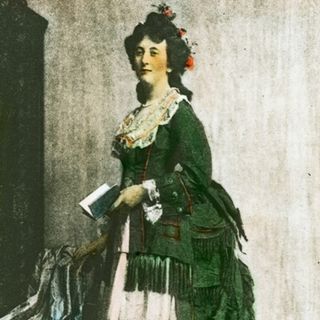
The woman depicted in this hand-coloured glass slide is wearing a dress from the Victorian era (approximately 1850s). The slide was part of an educational slide-show presented to Berlei fitters during the 1930s, designed to show the evolution of women's dress and underwear.
The dress would most probably have been made from floral patterned wool and lace. Her accessories include a bonnet trimmed with flowers and tied under her chin, white gloves, a blue jacket, a small purse and a lace parasol. Underneath this dress she would have been wearing a corset made of whale bone, laced tightly to accentuate her waist, and a crinoline - a stiff petticoat made of rigid wire, horsehair and cotton or linen. It was considered vulgar for women to expose any skin below their necks during the day, so modesty demanded high-necked dresses. Evening wear was slightly more revealing.
These undergarments made walking and sitting difficult, making for a fairly restricted life. Bicycles, which were invented in 1817, would have been off-limits for any woman wearing these garments. This look was only available to those who were reasonably wealthy. This slide is an important part of the Berlei story because it gives historical context to what Berlei were trying to achieve with their less restrictive corset designs, which they called 'foundation garments'. Whilst aiming to maintain the association the corset had with moral piety, they promoted a less constrictive design that allowed women a more active, healthful lifestyle.
Berlei also aimed to make their undergarments affordable to more people by undertaking research and standardising white Australian women into five different figure types in 1926. Previously the wealthy had elaborate corsets made to order and poorer people made their own.
Notes by Beth Taylor
The woman depicted in this hand-coloured glass slide is wearing a dress from the Victorian era (approximately 1850s). The slide was part of an educational slide-show presented to Berlei fitters during the 1930s, designed to show the evolution of women's dress and underwear.
The dress would most probably have been made from floral patterned wool and lace. Her accessories include a bonnet trimmed with flowers and tied under her chin, white gloves, a blue jacket, a small purse and a lace parasol. Underneath this dress she would have been wearing a corset made of whale bone, laced tightly to accentuate her waist, and a crinoline - a stiff petticoat made of rigid wire, horsehair and cotton or linen. It was considered vulgar for women to expose any skin below their necks during the day, so modesty demanded high-necked dresses. Evening wear was slightly more revealing.
These undergarments made walking and sitting difficult, making for a fairly restricted life. Bicycles, which were invented in 1817, would have been off-limits for any woman wearing these garments. This look was only available to those who were reasonably wealthy. This slide is an important part of the Berlei story because it gives historical context to what Berlei were trying to achieve with their less restrictive corset designs, which they called 'foundation garments'. Whilst aiming to maintain the association the corset had with moral piety, they promoted a less constrictive design that allowed women a more active, healthful lifestyle.
Berlei also aimed to make their undergarments affordable to more people by undertaking research and standardising white Australian women into five different figure types in 1926. Previously the wealthy had elaborate corsets made to order and poorer people made their own.
Notes by Beth Taylor
- NFSA IDDDJ7MFSG
- TypeImage
- MediumDocumentation
- FormInstructional, Advertisement (includes promotional), Still Image
- Year1930
Need to license this item? A/V professionals and researchers can shortlist licensing enquiries via our NFSA Pro catalogue search and membership.
Collections to explore

Television commercial
Australian women
1850s
Start your own collection
A free Your Stuff account allows you to save, organise and share your favourite videos, audio and stories.