Five Australian Figure Types
1930

Five Australian Figure Types
1930
- NFSA IDK30SX7FM
- TypeImage
- MediumDocumentation
- FormAdvertisement (includes promotional), Still Image
- Year1930
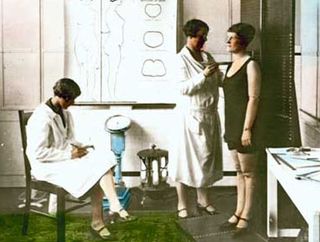
In 1926 Berlei and physiologists from the University of Sydney did an anthropometric survey of 6000 Australian women (of European descent) in order to find different figure types. The types they created were Sway Back Type, Hip Type, Abdomen Type, Average Type and Short Below Waist Type. Having many women fit into these categories meant they could manufacture corsets ahead of time and simply supply the correct size for the customer's measurements.
This research led to the creation of the Berlei Type Indicator whose moving parts could isolate the correct type from a woman's measurements. Seeking to enhance the legitimacy of their design underpinnings, images like this and the language used have a scientific and medical flavour to them. It's interesting that all but one of the figure types were pejorative terms - highlighting the 'figure flaws' of the women. Creating insecurity about a particular feature of a woman's body was (and continues to be) a successful marketing tool.
This slide was shown in an educational slideshow presented to Berlei fitters in the 1930s. It is a great example of Berlei's conscious decision to feature models of different shapes and sizes. Each woman, no matter her particular 'figure flaw', has a rose in her cheek and a proud, healthful persona. The slide is indicative of Berlei's love of pink during this era with the slide hand-coloured using pink and a tiny bit of yellow for the women's shoes. The slide uses four different typefaces.
Notes by Beth Taylor
In 1926 Berlei and physiologists from the University of Sydney did an anthropometric survey of 6000 Australian women (of European descent) in order to find different figure types. The types they created were Sway Back Type, Hip Type, Abdomen Type, Average Type and Short Below Waist Type. Having many women fit into these categories meant they could manufacture corsets ahead of time and simply supply the correct size for the customer's measurements.
This research led to the creation of the Berlei Type Indicator whose moving parts could isolate the correct type from a woman's measurements. Seeking to enhance the legitimacy of their design underpinnings, images like this and the language used have a scientific and medical flavour to them. It's interesting that all but one of the figure types were pejorative terms - highlighting the 'figure flaws' of the women. Creating insecurity about a particular feature of a woman's body was (and continues to be) a successful marketing tool.
This slide was shown in an educational slideshow presented to Berlei fitters in the 1930s. It is a great example of Berlei's conscious decision to feature models of different shapes and sizes. Each woman, no matter her particular 'figure flaw', has a rose in her cheek and a proud, healthful persona. The slide is indicative of Berlei's love of pink during this era with the slide hand-coloured using pink and a tiny bit of yellow for the women's shoes. The slide uses four different typefaces.
Notes by Beth Taylor
- NFSA IDK30SX7FM
- TypeImage
- MediumDocumentation
- FormAdvertisement (includes promotional), Still Image
- Year1930
Need to license this item? A/V professionals and researchers can shortlist licensing enquiries via our NFSA Pro catalogue search and membership.
Collections to explore

Australian women



Television commercial


Glass slides
Start your own collection
A free Your Stuff account allows you to save, organise and share your favourite videos, audio and stories.