The Kellerman one-piece bathing suit
1907

The Kellerman one-piece bathing suit
1907
- NFSA ID2C34WXDA
- TypeTelevision
- MediumMoving Image
- FormDocumentary, Still Image
- Year1907
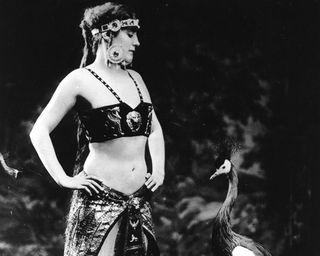
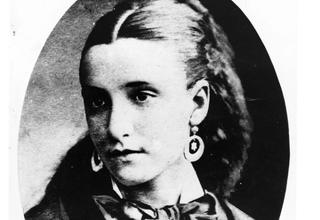
This studio portrait of Annette Kellerman, taken around 1907, shows her wearing a revolutionary one-piece swimming costume.
Peter Cox, curator of a 2016 exhibition about Kellerman for the Museum of Applied Arts and Sciences in Sydney, says 'Defying convention, she was responsible more than any other person for the gradual acceptance of the one-piece bathing suit'.
Prior to this, women were expected to keep their legs covered with pantaloons and wear bulky garments in the water. Kellerman discovered the freedom of men's cotton swimsuits during her endurance swims across the English Channel and down the Seine, Thames and Danube Rivers.
It is said that the Prince of Wales (later King George V) was to attend one of Kellerman's aquatic vaudeville performances in England. She had intended to wear her usual men's cotton bathing suit with bare thighs for her underwater routine. When told this was unacceptable for a royal audience, she improvised and wore tightly gartered long black stockings sewn into her swimsuit, creating a new svelte, but still modest, one-piece look.
There is a popular myth that Kellerman was arrested at Boston's Revere Beach for wearing a one-piece bathing suit however this isn't supported by any evidence.
By 1911 the term 'Annette Kellerman suit' was understood in America to mean a style of swimsuit much like this one which was relatively form-fitting with a knee-length, one-piece tunic worn with tights or shorter leggings.
Ever the entrepreneur, she lent her name to a range of 'Annette Kellerman Sun-Kist' swimsuits from around 1914 to the late 1930s.
It is hard to imagine now, but there was a ban on daylight swimming on Sydney's beaches until 1902. Kellerman did much to popularise swimming and the aquatic arts for women, including writing a book called How to Swim in 1918.
She wrote: 'Water is 700 times as heavy as air, and to attempt to drag loose-flowing cloth garments of any sort through water is like having the Biblical millstone around one’s neck'.
Notes by Beth Taylor
This studio portrait of Annette Kellerman, taken around 1907, shows her wearing a revolutionary one-piece swimming costume.
Peter Cox, curator of a 2016 exhibition about Kellerman for the Museum of Applied Arts and Sciences in Sydney, says 'Defying convention, she was responsible more than any other person for the gradual acceptance of the one-piece bathing suit'.
Prior to this, women were expected to keep their legs covered with pantaloons and wear bulky garments in the water. Kellerman discovered the freedom of men's cotton swimsuits during her endurance swims across the English Channel and down the Seine, Thames and Danube Rivers.
It is said that the Prince of Wales (later King George V) was to attend one of Kellerman's aquatic vaudeville performances in England. She had intended to wear her usual men's cotton bathing suit with bare thighs for her underwater routine. When told this was unacceptable for a royal audience, she improvised and wore tightly gartered long black stockings sewn into her swimsuit, creating a new svelte, but still modest, one-piece look.
There is a popular myth that Kellerman was arrested at Boston's Revere Beach for wearing a one-piece bathing suit however this isn't supported by any evidence.
By 1911 the term 'Annette Kellerman suit' was understood in America to mean a style of swimsuit much like this one which was relatively form-fitting with a knee-length, one-piece tunic worn with tights or shorter leggings.
Ever the entrepreneur, she lent her name to a range of 'Annette Kellerman Sun-Kist' swimsuits from around 1914 to the late 1930s.
It is hard to imagine now, but there was a ban on daylight swimming on Sydney's beaches until 1902. Kellerman did much to popularise swimming and the aquatic arts for women, including writing a book called How to Swim in 1918.
She wrote: 'Water is 700 times as heavy as air, and to attempt to drag loose-flowing cloth garments of any sort through water is like having the Biblical millstone around one’s neck'.
Notes by Beth Taylor
- NFSA ID2C34WXDA
- TypeTelevision
- MediumMoving Image
- FormDocumentary, Still Image
- Year1907
Need to license this item? A/V professionals and researchers can shortlist licensing enquiries via our NFSA Pro catalogue search and membership.
Collections to explore

Annette Kellerman


Fashion Design

1900s
Start your own collection
A free Your Stuff account allows you to save, organise and share your favourite videos, audio and stories.


