Frontline: Too Many Pictures
1979
Frontline: Too Many Pictures
1979
- NFSA IDN54AH7BS
- TypeFilm
- MediumMoving Image
- FormDocumentary
- Duration54 mins
- Year1979
Combat cameraman Neil Davis discusses one of the most memorable images of the Vietnam War, when the national police chief shot dead a Vietnamese suspect. Davis tells the full story of how the prisoner was suspected of killing the police chief’s friend, together with his wife and six children. Summary by Damien Parer.
Frontline was nominated for Best Documentary (Feature) at the 1980 Academy Awards.
Combat cameraman Neil Davis discusses one of the most memorable images of the Vietnam War, when the national police chief shot dead a Vietnamese suspect. Davis tells the full story of how the prisoner was suspected of killing the police chief’s friend, together with his wife and six children. Summary by Damien Parer.
Frontline was nominated for Best Documentary (Feature) at the 1980 Academy Awards.
- NFSA IDN54AH7BS
- TypeFilm
- MediumMoving Image
- FormDocumentary
- Duration54 mins
- Year1979
- Production companyFrontline FilmsProducerDavid BradburyDirectorDavid BradburyMusicMidnight Oil, Lindsay Lee, Denise WykesCastRichard OxenburghAcknowledgementsProduced in association with the ABC. Produced with the assistance of the Tasmanian Film Corporation and the Australian Film Commission
This clip starts approximately 30 minutes into the documentary.
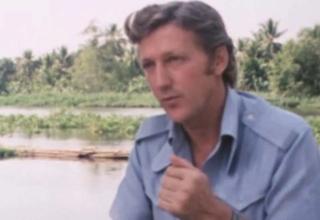
Cameraman Neil Davis is interviewed by a river bank.
Neil I don’t think anybody can be excused for killing an unarmed man. However, it happens in wartime a lot. General Luang wasn’t exceptional in that. He killed the man, the Vietcong, in the full view of the public in the streets of Saigon. That was exceptional, for a national police chief to do that. There was a reason, of course, from his point of view. Only an hour before, he had learnt that the Vietcong had swept over the police compound in Saigon and his best friend, who was a police colonel, and the colonel’s wife and six children, had all been killed.Archival footage of young civilian victims of the Vietnam War is presented as Davis’s explains how the deaths of a family known to Nguyen Ngoc Loc may have triggered this shocking public execution.
Neil Of course, the colonel was killed in the course of his duty, but the six children – and General Luang was the godfather to some of those children – had been murdered. Their throats had been cut.South Vietnamese troops are shown escorting the suspected Vietcong guerrilla down a street where he is confronted by the police general.
Neil When the Vietcong was brought before Luang in the street, he asked where he’d been captured and the troops said he’d been captured near the police compound, whereupon Luang, whatever went through his mind, one can only imagine.A fascinating and little-heard first hand account of the circumstances around one of the most famous images to come out of the Vietnamese war.
Frontline synopsis
A biographical documentary about the working life of combat cameraman and correspondent, Neil Davis (1934–1985). The former Tasmanian went to Vietnam in 1974, working for the London based Visnews. He worked alone filming the Vietnam War and continued on into Cambodia. As a war correspondent, he worked at the extreme front-line, filming the Vietnamese army and on several occasions filming the enemy, the Vietcong. The documentary includes a filmed interview with Davis, much of his famous war footage and historical footage.
Frontline curator's notes
A fascinating documentary. The viewer sees the remarkable footage taken under fire and hears Neil Davis’s description of the circumstances. He talks about the role of the war correspondent and gives the sense of being engulfed in war when your colleagues and friends are killed.
Education notes
This clip shows Neil Davis talking about his experiences as an Australian combat cameraman reporting on the Vietnam War. The clip opens with Davis describing the execution of a suspected Vietcong guerilla in the streets of Saigon by the South Vietnamese police general Nguyen Ngoc Loan. Archival footage of some of the civilian victims of the War is presented as Davis’s voice-over explains the background to the execution. South Vietnamese troops are shown taking the suspected Vietcong guerilla to the police chief.
Notes by Damien Parer
Educational value points
- The Vietnam conflict (1954-75) stemmed from the war for Vietnamese independence from the colonial French, and then from 1959 became a civil war between communist-led North Vietnam and South Vietnam, supported by some democratic countries. The USA became involved in the Vietnam War in a bid to 'contain’ communism in South-East Asia and because it saw the defence of South Vietnam as a crucial part of the Cold War.
- Opposition to the Vietnam War was strengthened when the US and Australian public saw the shocking image of the execution of a Vietcong guerilla by South Vietnamese police general Nguyen Ngoc Loan in a Saigon street. It was captured by a National Broadcasting Corporation (NBC) war photographer, Eddie Adams, and would become one of the most famous images of the War.
- Media coverage of the Vietnam War brought the horror of the War into the living rooms of the USA and Australia, turning the public against it. Media coverage was unrestricted and despite the fact that the US and Australian governments did not want the public to see the reality of war, the television networks decided what they would broadcast. The Vietnam War was dubbed the 'television war’.
- More civilians die in war than do armed combatants and the murder of the police officer’s wife and children reported in this clip is a tragic example of the effects of war on the civilian population. In 1995 the Vietnamese Government released its official estimate of war dead – 2 million civilians in South Vietnam, 2 million civilians in North Vietnam and 1.1 million North Vietnamese and Vietcong soldiers.
- Neil Davis (1934-85) was one of Australia’s most respected combat cameramen, filming and reporting on the Vietnam War over the period 1964-75. In 1975 he filmed North Vietnamese troops taking the Presidential Palace in Saigon, the symbol of US defeat. His coverage of the Vietnam War was unusual in that he chose to film the War from a South Vietnamese rather than a US perspective.
- This clip shows a young man with bare feet and in civilian clothes suspected of being a Vietcong fighter. 'The Vietcong’ was the name of the guerilla force that fought with the North Vietnamese Army against South Vietnam from the late 1950s to 1975. Personnel were mostly recruited in South Vietnam and received military aid and training from the North Vietnamese Army, but lived and operated in the cities and countryside of South Vietnam.
- The South Vietnamese Army, known as the Army of the Republic of Vietnam (ARVN), fought against the North Vietnamese Army and the Vietcong during the Vietnam War from 1956 until the fall of Saigon in 1975. The South Vietnamese troops bore the brunt of the conflict and once US support was withdrawn the ARVN did not have the supplies to sustain a defence of South Vietnam.
- The Australian Government, which was also concerned about the spread of communism in the region due to what was known as the 'domino theory’, decided to join the USA in support of the South Vietnamese. By the late 1960s the War had become increasingly unpopular and the USA and Australia, after having to concede a humiliating defeat, finally withdrew their troops in 1973. North Vietnam overcame the South in 1975 and Vietnam was reunited in 1976.
- Being a war correspondent is one of the most dangerous jobs in journalism. To obtain the required written accounts, images and film footage the correspondent has to be in the war zone and is therefore vulnerable to stray bullets, bombs and artillery fire. Neil Davis, featured in this clip, was regarded as one of the bravest war correspondents during the Vietnam War because he worked at the extreme front-line, filming the South Vietnamese Army and on several occasions the enemy, the Vietcong, in battle.
Education notes provided by The Learning Federation and Education Services Australia
Need to license this item? A/V professionals and researchers can shortlist licensing enquiries via our NFSA Pro catalogue search and membership.
Collections to explore
Asia
Investigative journalism
Production Crew
Start your own collection
A free Your Stuff account allows you to save, organise and share your favourite videos, audio and stories.


