First Australians: A Fair Deal for a Dark Race - Vote YES for Aborigines, Episode 6
2008
First Australians: A Fair Deal for a Dark Race - Vote YES for Aborigines, Episode 6
2008
- NFSA ID6HKR33VB
- TypeTelevision
- MediumMoving Image
- FormSeries
- Duration52 mins
- GenresIndigenous themes or stories, Indigenous as subject
- Year2008
- WARNING: Aboriginal and Torres Strait Islander viewers are advised that the following program may contain images and/or audio of deceased persons
The Federal Council for the Advancement of Aborigines and Torres Strait Islanders (FCAATSI) has fought for the rights of Aboriginal people to be recognised in line with other civil rights movements occurring overseas. A referendum is called in 1967 for the public to make a choice. In this clip we see archival footage of Faith Bandler and Sir Doug Nicholls, who were instrumental in the fight for Aboriginal rights.
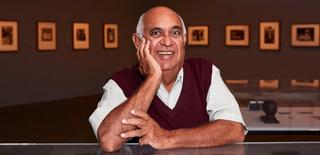
Writer Bruce Pascoe of Boonwurrung Heritage and historians Professor Marcia Langton of the Yiman-Bidjara Nation and Professor Gordon Briscoe of the Maraduntjara Nation give their unique perspectives on the outcomes of the referendum. Summary by Sophia Sambono.
- WARNING: Aboriginal and Torres Strait Islander viewers are advised that the following program may contain images and/or audio of deceased persons
The Federal Council for the Advancement of Aborigines and Torres Strait Islanders (FCAATSI) has fought for the rights of Aboriginal people to be recognised in line with other civil rights movements occurring overseas. A referendum is called in 1967 for the public to make a choice. In this clip we see archival footage of Faith Bandler and Sir Doug Nicholls, who were instrumental in the fight for Aboriginal rights.
Writer Bruce Pascoe of Boonwurrung Heritage and historians Professor Marcia Langton of the Yiman-Bidjara Nation and Professor Gordon Briscoe of the Maraduntjara Nation give their unique perspectives on the outcomes of the referendum. Summary by Sophia Sambono.
- NFSA ID6HKR33VB
- TypeTelevision
- MediumMoving Image
- FormSeries
- Duration52 mins
- GenresIndigenous themes or stories, Indigenous as subject
- Year2008
- Production companyBlackfella FilmsProducersDarren Dale, Rachel PerkinsSeries producerHelen PanckhurstDirectorBeck ColeWritersLouis Nowra, Beck ColeComposerPhillip MillerAcknowledgementsProduced in association with SBS, Screen Australia, New South Wales Film and Television Office, South Australian Film Corporation, ScreenWest and Lotterywest
It seems unthinkable now that less than 50 years ago Aboriginal people in Australia were not counted as human beings in the census, but were classified in the category of fauna or animals. While this referendum changed the perception of Aboriginal people in Australia it did not give them the rights FCAATSI had hoped for.
It took many more years of campaigning and activism to get to a point where urban Aboriginal people have the same choices and rights as white people. However, even now, we are not at a point of equality. The Commonwealth Racial Discrimination Act 1975 was suspended in 2007 to roll out the Northern Territory Intervention in remote Indigenous communities so the Government could intervene ‘for their own good’. To this day, despite innumerable protests, there are no signs of its reversal.
First Australians: A Fair Deal for a Dark Race synopsis
Episode six, A Fair Deal for a Dark Race, explores Indigenous history from 1930–67, primarily in the south-eastern regions of Australia, through the lives of Yorta Yorta men Doug Nicholls and his uncle, William Cooper.
Across the continent, the first Australians are governed by ‘protective legislation’ which binds them to reserves, controls their wages, residency, ability to marry and travel. Yorta Yorta man William Cooper forms the Australian Aborigines League in 1933 to continue his life-long campaign for equality. His nephew, Doug Nicholls, also becomes political. A Church of Christ pastor he becomes a champion for those affected by the Maralinga nuclear bomb tests in the 1950s. Also covered is the 1967 Referendum, where Australian Aboriginal people gained their civil rights.
First Australians: A Fair Deal for a Dark Race curator's notes
Politically, this is a rich period in Indigenous history and it’s difficult to tell all the stories in just 52 minutes. In 1930, Australia was in the midst of the Great Depression; it was especially rough for Indigenous Australians who, in 1929, were already at the bottom of the Australian economic ladder. Growing up on Aboriginal reserves, life was harsh, education was limited and there were very few options for ‘employment’.
William Cooper, like many individuals throughout First Australians, refused to let hardship hold him back. He established the Aborigines’ Advancement League in 1932 and spent the rest of his life fighting for equality and the rights of Aboriginal people all over Australia. As well as an attempted petition to the King in 1933, he and Jack Patten organised a Day of Mourning to coincide with the 150-year anniversary of white settlement. This Day of Mourning led to the establishment of the National Aboriginal and Islander Day of Observance Committee (NAIDOC), and today NAIDOC is a week-long annual celebration of the history, culture and achievements of Aboriginal and Torres Strait Islander peoples.
During the long fight for rights, Aboriginal people endured many atrocities, some of which are outlined in this episode and through the series. Many of these offences against human rights were experienced by other subjugated and colonised peoples throughout the world. A case in point are the exemption certificates described in this episode, which were issued around the time of the Second World War in Australia. The control and restrictions they placed on the movements of Aboriginal people were similar to the control systems in place in South Africa during the apartheid era. In Australia these certificates, which granted some citizenship rights, could be attained if Aboriginal people were prepared to, in effect, renounce their Aboriginality. This system was resented by the people but, as alluded to by historians in the course of the episode, it was accepted, not because they were happy with it, but because they needed to eat.
In the 1950s and ’60s, although Australia was influenced by civil rights movements around the world, there was little acknowledgement of the segregation that was occurring in this country. Even today, this shameful part of Australian history seems to be forgotten. This episode explores how Charles Perkins used the Freedom Ride campaign of 1965 as a consciousness-raising exercise, to gain media attention much to the embarrassment of many white townspeople in rural New South Wales.
One other particularly disturbing, but largely forgotten, event which is featured in this episode is the aftermath of the Maralinga bombings. Doug Nicholls went out to the desert to film what happened to the Aboriginal people affected by nuclear testing and raised awareness by showing the heart-wrenching footage on television on his return to Melbourne. It’s incredibly difficult to comprehend that events as significant as this, which were screened on popular media, have disappeared from the public consciousness in one generation.
Perhaps the most significant achievement for civil rights in Australia – the 1967 Referendum – is also covered in this episode. This victory was so very significant because it was not just about winning back civil rights, but about overcoming long-held societal values and ideas about Aboriginality.
Doug Nicholls, whose writings are read by Ernie Dingo, fought alongside his uncle William Cooper and other remarkable political figures of the time for equality and to improve the quality of life for all his people. He was finally recognised for his efforts in 1976 when he was knighted and made Governor of South Australia.
This success, however, makes him a symbol of how to successfully assimilate ‘the native’ into white society. His football career and Christianity allowed him to be accepted into European society. In the end, it confirms Marcia Langton’s estimation that only excellence in sport, entertainment or war service allowed an Aborigine a higher standing in society, and Nicholls ‘appeared to be different from their stereotyped imagination’.
This episode was first broadcast on SBS on Tuesday 28 October 2008.
Notes by Sophia Sambono
Need to license this item? A/V professionals and researchers can shortlist licensing enquiries via our NFSA Pro catalogue search and membership.
Collections to explore

First Nations filmmakers

First Nations


First Nations artists
Start your own collection
A free Your Stuff account allows you to save, organise and share your favourite videos, audio and stories.


