EP Magic Lantern toy projector
1866

EP Magic Lantern toy projector
1866
- NFSA IDW5NKWMRZ
- TypeObjects
- MediumArtefact
- FormEquipment, Domestic
- GenresChildren
- Year1866
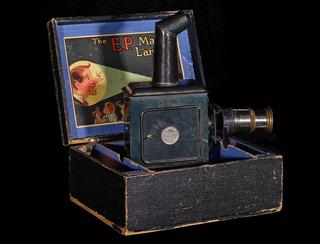
This rare Magic Lantern box kit was made by Ernst Plank (EP), the second-largest maker of tin toys after the Bing brothers (also German). It came with 12 chromolithographic glass slides featuring images of sailing ships, oceans, children playing, a stork delivering babies, animals and sporting activities.
Inside the lantern are reflector mirrors that indicate that this lantern used the Argand oil lamp with wick developed by Francois-Pierre-Ami Argand in 1783 and improved by Ernst Plank. Typically, an Argand lamp relied on whale oil, seal oil or olive oil to feed the burner.
Magic lantern projectors were developed from the 17th century but rose to mass popularity in the 19th century, and offered viewers a thrilling pre-cinematic experience. Considered the grandmother of the slide projector, French engineer and early innovator Pierre Petit described them in 1664 as the ‘lanterne de peur’ – the lantern of fear – owing to their dazzling impact on audiences. The devices were used in the 19th century for educational and entertainment purposes and were eventually mass-produced as children’s toys.
This rare Magic Lantern box kit was made by Ernst Plank (EP), the second-largest maker of tin toys after the Bing brothers (also German). It came with 12 chromolithographic glass slides featuring images of sailing ships, oceans, children playing, a stork delivering babies, animals and sporting activities.
Inside the lantern are reflector mirrors that indicate that this lantern used the Argand oil lamp with wick developed by Francois-Pierre-Ami Argand in 1783 and improved by Ernst Plank. Typically, an Argand lamp relied on whale oil, seal oil or olive oil to feed the burner.
Magic lantern projectors were developed from the 17th century but rose to mass popularity in the 19th century, and offered viewers a thrilling pre-cinematic experience. Considered the grandmother of the slide projector, French engineer and early innovator Pierre Petit described them in 1664 as the ‘lanterne de peur’ – the lantern of fear – owing to their dazzling impact on audiences. The devices were used in the 19th century for educational and entertainment purposes and were eventually mass-produced as children’s toys.
- NFSA IDW5NKWMRZ
- TypeObjects
- MediumArtefact
- FormEquipment, Domestic
- GenresChildren
- Year1866
- From theRay Barnes Collection
Need to license this item? A/V professionals and researchers can shortlist licensing enquiries via our NFSA Pro catalogue search and membership.
Collections to explore


Childhood toy
1860s


Domestic life
Start your own collection
A free Your Stuff account allows you to save, organise and share your favourite videos, audio and stories.


