Bread and Dripping: Picketing during the Great Depression (1981)
1981
Bread and Dripping: Picketing during the Great Depression (1981)
1981
- NFSA IDHT6WFQ58
- TypeFilm
- MediumMoving Image
- FormDocumentary
- Duration17 mins
- Year1981
Timber bosses employed cheap 'scab’ labour to save money. The former employees picketed the mill. Women, led by the Militant Women’s Group (MWG), collected food and money and explained to neighbours the reason for the picket.
Timber bosses employed cheap 'scab’ labour to save money. The former employees picketed the mill. Women, led by the Militant Women’s Group (MWG), collected food and money and explained to neighbours the reason for the picket.
- NFSA IDHT6WFQ58
- TypeFilm
- MediumMoving Image
- FormDocumentary
- Duration17 mins
- Year1981
- A film byElizabeth Schaffer, Margot Nash, Wendy Brady, Donna Foster and Vic SmithProduction companyWimminsfilms
This clip starts approximately 14 minutes into the documentary.
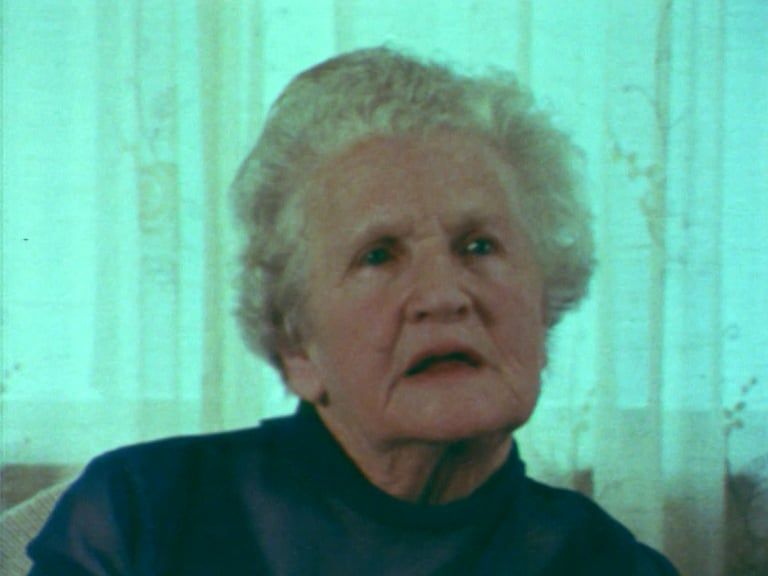
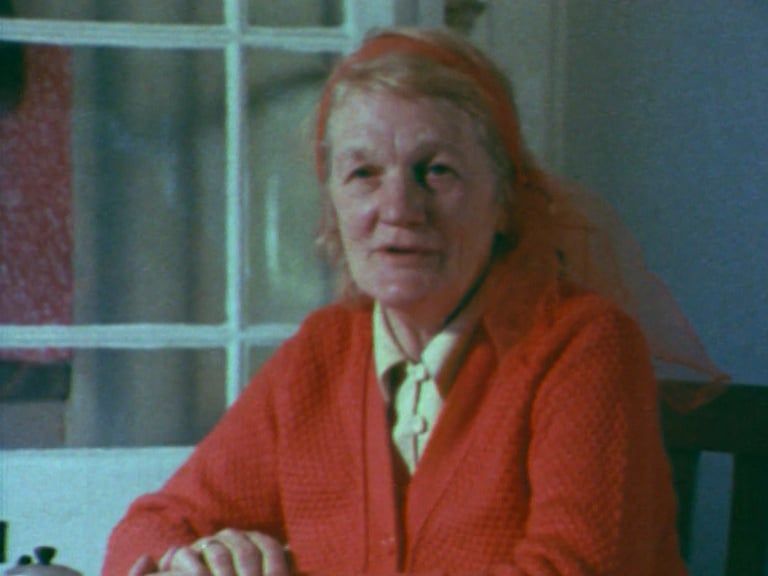
Mary White describes the Australian Timber Workers Union strike in Sydney, which started on the eve of the Great Depression in 1929.
Mary White is interviewed in a lounge room. The interview is intercut with photos from the time. We see a freight horse and cart, a busy street with cars, woman speaking among the crowds with placards that read ‘Timberworkers pay no rent’, ‘Join the Militant Womens Group’ and ‘Equal pay for equal work’.
Mary White One of the very interesting developments during the period of the timber workers lockout was the development of mass picketing. Hundreds, almost thousands of people turned up outside, particularly outside George Hudson’s yard in Glebe to picket the scabs coming in and going out in the afternoon. And there was tremendous jubilation amongst the people, particularly, I think, amongst the women who took part in it. We marched down from Glebe Road, down to the workshop entrance. One of the extraordinary developments in the timber workers lockout was the development by women of the activities of relief for the timber workers. This was primarily, so far as I’m concerned, from the Militant Women’s Group, an organisation formed in the middle ‘20s in Sydney. Later spread to Brisbane. During the lockout, they organised house to house collections with the timber workers’ wives. The timber workers’ wives themselves went house to house collecting food and explaining the position of the timber workers to the householders, who were again, of course, mainly women, the ones we saw anyway. And ah, in the case of the Glebe one, they continued to collect donations for well over a year, which is quite a long time to keep anything like that going.
This clip shows Mary Wright describing the Australian Timber Workers Union strike in Sydney, which started on the eve of the Great Depression in 1929. She talks about the mass pickets outside Hudson’s Timber Yard in Glebe, an inner-Sydney suburb, and how women, led by the Militant Women’s Group (MWG), organised strike relief and went from house to house explaining the reasons for the strike and collecting donations for the families of the striking workers. The clip also includes black-and-white archival photographs of the picket, women protesting and a strike-relief committee.
Educational value points
- The 1929 Australian Timber Workers Union strike was brought about by the worsening economic crisis in Australia. In response to an economic downturn, timber employers were pushing for wage cuts and longer hours. Timber workers in New South Wales and Victoria took industrial action in early 1929 after the Arbitration Court upheld an earlier ruling by Judge Lukin increasing the working week for all timber workers from 44 to 48 hours and reducing wages, despite productivity gains in the industry. Lukin’s Award has been described as 'the most savage Award in the history of Australian unionism’.
- Striking workers were locked out by employers and, despite rising unemployment as the Great Depression took hold, the strike lasted for 2 years in some locations. The strike was a test of strength for the new Australian Council of Trade Unions (ACTU) and many workers felt that if the timber workers caved in, other trades would be forced to follow.
- The clip refers to the Militant Women’s Group (MWG), formed by the Communist Party of Australia in 1926 to campaign for women’s rights. Active in NSW and Queensland, the group organised the wives of workers in the traditionally militant and male-dominated timber, mining and waterside industries in the three great strikes that preceded the Great Depression. The MWG, which initiated the first Australian International Women’s Day (IWD) rally in Sydney in 1928, held a special IWD rally the following year to support the wives and families of striking timber workers.
- As indicated in the clip, women participated in the strike in unprecedented numbers. Led by the MWG, the wives and daughters of timber workers campaigned for support for the strike and organised relief as well as joining the picket line. One commentator notes, 'women who had never spoken in public before found themselves addressing meetings and reading the daily strike bulletins on 2KY, the Trades Hall radio station’ (Audrey Johnson, Bread and Roses: A personal history of three militant women and their friends 1902–1988, Left Book Club, 1990). They also marched on a government-sponsored 'Industrial Peace Conference’ and raided the offices of the Timber Combine, an association of timber mill owners.
- The clip describes the picket of George Hudson and Sons timber mill in Glebe. Mass pickets of up to 1,000 striking timber workers and their supporters picketed the yard. Confrontations between police and picketers led to the arrest of many striking workers and union leaders, who were also charged with 'conspiracy to prevent men from following their lawful occupations’. Hudson’s mill was the largest in Sydney and employed about 1,000 men.
- In the clip, Mary Wright makes reference to scabs. During the strike, timber mills employed non-union workers willing to work for lower pay, who were derisively labelled 'scabs’. Picketers jeered at the workers going to and from work, and tried to obstruct timber trucks leaving the yard, forcing the use of police escorts. Feelings against non-union workers ran high, as they were blamed for children going hungry.
- Although there were a number of state government relief schemes to assist families, many striking workers depended on handouts. Trade unions collected a levy from their members, which they donated to the striking workers. A relief committee was also set up to collect donations of food, money and clothing from local households and factories and the clip suggests that the local community was responsive. The Sydney timber mills were concentrated in working-class areas such as Glebe and Balmain, where support for the strikers was high.
- Bread and Dripping is an example of the type of documentary produced by Australian women filmmakers between 1970 and the early 1980s. Like Bread and Dripping, many of the feminist documentaries made in that period focused on women’s personal experiences, favouring autobiographical discourse, oral histories and the absence of an 'authoritative’ or controlling voice-over.
Need to license this item? A/V professionals and researchers can shortlist licensing enquiries via our NFSA Pro catalogue search and membership.
Collections to explore
.jpg?w=320&h=240&auto=format)


Documentary
.jpg?w=320&h=240&auto=format)
The Great Depression
Australian women
Start your own collection
A free Your Stuff account allows you to save, organise and share your favourite videos, audio and stories.
.jpg?w=640&h=480&auto=format)

.jpg?w=640&h=480&auto=format)


.jpg?fp-x=0.5390625&fp-y=0.2357638888888889&w=640&h=485&fit=crop&crop=focalpoint&auto=format)
.jpg?fp-x=0.806640625&fp-y=0.4921875&w=640&h=485&fit=crop&crop=focalpoint&auto=format)

