We acknowledge Australia’s Aboriginal and Torres Strait Islander peoples as the Traditional Custodians of the land on which we work and live and give respect to their Elders, past and present.

Read our Statement of Reflection

Your Cart

Your cart is empty right now...

Discover what's on
Your Stuff
Lists
No lists found
Create list
List name
0 Saved items
Updated: a few seconds ago
Getting Started
Get started with Your Stuff

A free Your Stuff account allows you to save, list and share your favourite collection items and articles. This account will give you access to Your Stuff, NFSA Player and Pro. You will need to create an additional account for Canberra event tickets.

Confirm
Skip to main content
National Film and Sound Archive of AustraliaNational Film and Sound Archive
National Film and Sound Archive of Australia
National Film and Sound Archive
National Film and Sound Archive of Australia
National Film and Sound Archive

Corinne Cantrill

1928 – 2025

Corinne Cantrill, a pioneering figure in Australian experimental filmmaking, passed away on 18 February 2025 at the age of 96.

Written by Hannah De Feyter
18 March, 2025
4 minute read

Corinne Cantrill, a pioneering figure in Australian experimental filmmaking, passed away on 18 February 2025 at the age of 96.

Shaped by nonconformity

Born 6 November 1928 in Sydney, Corinne Mozelle Cantrill (née Joseph) had a life that was, from its beginning, shaped by nonconformist ideas: her Sephardic Jewish father was an active member of the Communist Party, her mother a member of the Theosophical Society. Corinne grew up immersed in the bohemian intellectual circle of Pakie’s Club on Elizabeth Street, working as a botanist and artist’s model in her early twenties before spending time in Europe, writing intermittent articles about the expat experience for Australian magazines.


Experimental film... is an interesting place to work from. We can see the diverse possibilities of film that haven’t even begun to be thought about or worked on that await our attention.
Corinne Cantrill

Back in Australia, Corinne met her husband and lifelong collaborator Arthur Cantrill – at the time a puppeteer – while they were both working for the Children’s Library and Craft Movement in Brisbane. In 1959 the pair were tasked with making a series of short educational films for the ABC, sparking a five-decade career in (or more correctly, obsession with) experimental filmmaking. After spending several years in London making documentaries for the BBC, the pair took up a Fellowship in the Creative Arts at the Australian National University in Canberra before eventually settling in Melbourne, where their live ‘Expanded Cinema’ performances became a mainstay at La Mama Theatre. Watch a clip from Skin of Your Eye (1973), a cinematic essay by Arthur and Corinne about the flow of time, the filmic process, and the Melbourne counter-culture scene in the early 1970s.

The clip below is from Corinne's film In This Life’s Body (1984), in which she reflects on the events of her life using photographs and home movies:

Clip from In This Life’s Body (1984), Corinne Cantrill’s momentous 147-minute filmic autobiography, which meditates on family, work, love, the body, photography, time and space. Corinne was known to get up and perform tai chi during screenings of the film. Watch another clip from the film

National Film and Sound Archive0AR5FRA9

Pushing the boundaries of film

A flyer advertising a film screening in Melbourne to mark 20 years of film journal Cantrill's FIlmnotes. The flyer has an illustration of a man wearing sunglasses with red lenses

Poster advertising film program celebrating 20 years of Cantrill’s Filmnotes, 1991. NFSA title: 1105309

Corinne Cantrill’s staggering filmography spans some 150 works, including seven features, most made in collaboration with her husband Arthur and featuring his electronic music. They include avant-garde shorts, experimental documentary, animation, landscape studies, and expanded cinema works with multi-screen projection.

Corinne was responsible for the distribution, exhibition and promotion of their work, which through her lifetime screened globally at festivals and galleries including the Museum of Modern Art in New York, the Musée National d'Art Moderne in Paris, Deutsche Kinemathek’s Kino-Arsenal in Berlin, and Xcèntric, Centre de Cultura Contemporània in Barcelona.

Corinne also independently managed the circulation of the self-published magazine Cantrill’s Filmnotes, which ran for 100 issues between 1971 and 2000. Featuring articles, interviews, reviews and manifestos, the magazine showcases an incredible community of DIY filmmakers that the Cantrills counted as friends and peers both nationally and internationally. The Filmnotesalone constitute an invaluable contribution to Australian film history.

Surveying Corinne Cantrill’s work in the NFSA collection, I am struck first and foremost by her sheer love of film: the pleasure she takes in colour, light and movement, in the manual work of filmmaking and the materiality of the medium. She was an experimental artist in the truest sense: making work to test a hypothesis, to find out what film fundamentally is, what it can do. She approached these experiments with the rigour and curiosity of a scientist, and this mindset led to many innovative formal discoveries. Corinne firmly rejected intellectual or analytical approaches to cinema in favour of the sensual experience of watching, of pushing the boundaries of perception. The results are visually striking, playful, profound, and utterly distinctive. They are films that teach you how to watch film.

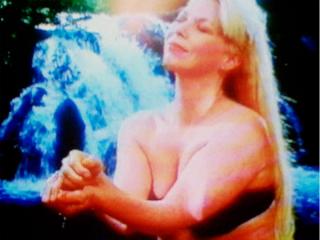
Excerpt from Waterfall (1984), one of Arthur and Corinne Cantrill’s innovative ‘three-colour separation studies’, shot on black-and-white 16mm negative and printed as three separate pieces of film using red, green and blue colour filtration. The three films are then superimposed, and due to time differences between them, any changes in movement register to create unique colour flares.

National Film and Sound ArchiveS7EYJP92

Corinne also exhibited remarkable toughness and self-belief. Throughout her career, she remained fiercely independent, utterly uncompromising in her artistic values, and charmingly, vocally proud of her own work. The amount of grit and idealism required to make even one deeply avant-garde, boundary-pushing film in Australia is enormous. To independently make, distribute and promote such an incredible body of work, while championing other such artists, is legendary.

There are precious few Australian filmmakers of Corinne Cantrill’s like. We honour her, and mark her loss.

Invalid url

Excerpt from oral history interview with Corinne and Arthur Cantrill conducted by Andrew Pike, 1970. Corinne talks about the techniques used in their feature film Harry Hooton (1969) and says it is 'the most important film ever made in Australia'. Courtesy: Andrew Pike.

National Film and Sound ArchivePZJ90V7J

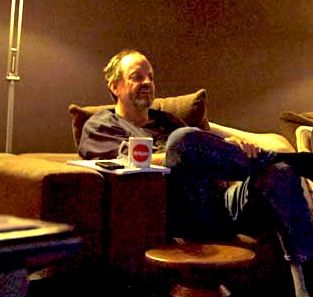
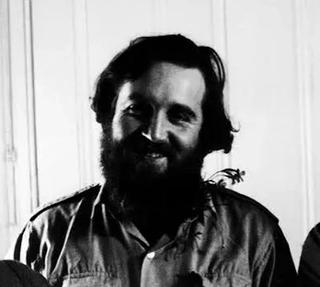
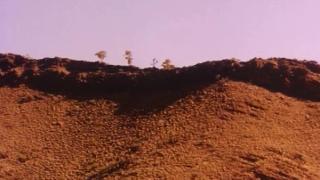
Main image: Montage of stills from In this Life’s Body (Corinne Cantrill, 1984). NFSA title: 554577

Highlighted quote: Corinne Cantrill in a personal statement for Blonski, Creed & Freiberg (eds.), Don’t Shoot Darling! Women’s Independent Filmmaking in Australia, Greenhouse Publications, 1987

More by Hannah

Collections to explore

  • In memoriam

  • Obituaries

  • Experimental

  • Start your own collection

    A free Your Stuff account allows you to save, organise and share your favourite videos, audio and stories.

More in Stories+

Personalized your experience

Save, create and share

With NFSA Your Stuff