We acknowledge Australia’s Aboriginal and Torres Strait Islander peoples as the Traditional Custodians of the land on which we work and live and give respect to their Elders, past and present.

Read our Statement of Reflection

Your Cart

Your cart is empty right now...

Discover what's on
Your Stuff
Lists
No lists found
Create list
List name
0 Saved items
Updated: a few seconds ago
Getting Started
Get started with Your Stuff

A free Your Stuff account allows you to save, list and share your favourite collection items and articles. This account will give you access to Your Stuff, NFSA Player and Pro. You will need to create an additional account for Canberra event tickets.

Confirm
Skip to main content
National Film and Sound Archive of AustraliaNational Film and Sound Archive
National Film and Sound Archive of Australia
National Film and Sound Archive
National Film and Sound Archive of Australia
National Film and Sound Archive

Richard Kingsmill's Radio 2SER documentary on the 1980s music industry

Australian music industry in the 1980s

Dr Liz Giuffre, archivist for Sydney community radio station 2SER 107.3, shares excerpts from a music industry documentary by Richard Kingsmill that was broadcast in 1988.

Written by Liz Giuffre
25 September, 2019
4 minute read

Archivist Dr Liz Giuffre shares excerpts from Money, Not Harmony, a four-part music industry documentary by Richard Kingsmill that aired on Sydney community radio station 2SER 107.3 in 1988.

Richard Kingsmill and 2SER

The Australian music industry in 1988 was very different to what we know now. CDs were relatively new, cassettes were all the rage, records were still mostly vinyl, FM radio was dominated by 'blokey' blokes and Countdown had just left TV.

2SER logo

To capture the moment was Richard Kingsmill – then working for Sydney community radio station 2SER FM. Kingsmill would go on to become an extremely important part of the industry he so carefully documented here – on and behind the microphone at triple j.

There he did hundreds, if not thousands of interviews, pioneered the series The J-Files, wrote a couple of books and generally continued to champion all that is good about music. Now the Group Music Director of the music teams at triple j, Double J, Unearthed, ABC Radio and ABC Country, Kingsmill is an important cog in the big wheel as it turns.

Kingsmill’s 1988 documentary, Money, Not Harmony, is a four-part series focused on different aspects of the music industry. The mainstream commercial players of the time were given particular airtime (and analysis) – the type of commentary that only independent media like community radio could provide.

The sound of the series is quite sedate by today’s standards, with editorials by Kingsmill delivered with a formality that music radio doesn’t hear today. There’s also a clear lack of diversity, with the documentary completely dominated by male voices. This is not a criticism of Kingsmill or the piece necessarily, but a sign of where power was thought to lay in the industry at the time.

The NFSA holds a copy of the series as part of its community radio archive, and we're publishing excerpts from it here. 2SER has also contributed pioneering programming on the LGBTQIA+ community, various musical genre specialities (from country to dance) and independent news and current affairs.

Money, Not Harmony – Excerpts

The first episode of Money, Not Harmony looks at the music press and its influence. In particular, Kingsmill explores the relationship between major record companies, advertising and favourable (or not) reviews.

It’s all very different to how the music industry and the press interact in the late 2010s – not least because there are so few print outlets left to cover this type of news. To create the picture there are lively interviews with journalists from the Sydney Morning Herald and RAM magazine, as well as EMI and CBS records. As this short excerpt reveals, there’s more than a little tension in the relationship between the music press and the record companies:

Invalid url

Money, Not Harmony (excerpt), Episode 1: 'The Music Press and Its Influence',1988. Courtesy: 2SER 107.3.

National Film and Sound ArchiveW9TYKDAX

In episode two, Kingsmill examines the influence of radio. Interestingly, his future employer, triple j, is absent from the discussion, but this leaves room for a nuanced understanding of how commercial deals were done with the then extremely dominant big city FM stations.

What’s most striking is how local and new artists are sidelined in the discussions, and how international ‘classic hits’ dominated the airwaves. So, not that different to today after all.

In this short excerpt, Kingsmill compares the Australian context in the mid-80s to the US and notes the growing gap between commercial radio playlists and what appears on the Top 40 record charts:

Invalid url

Money, Not Harmony (excerpt), Episode 2: 'The Influence of Radio', 1988. Courtesy: 2SER 107.3.

National Film and Sound ArchiveW9TYKDAX

The third episode considers music retailers. A 2019 music fan will find this piece particularly interesting (and perhaps alien!). In the pre-digital industry, artists, record companies and their distributors really had to fight for attention. And of course, money.

This episode considers formats, strategies, and touches on the early influences of piracy on the local industry. Featured is Warren Fahey from Larrikin Records, as well as journalist Phil Tripp, whose international perspective gives good insight into how prices were being influenced by forces beyond the local market:

Invalid url

Money, Not Harmony (excerpt), Episode 3: 'Music Retailers', 1988. Courtesy: 2SER 107.3. NFSA title:594880

National Film and Sound ArchiveW9TYKDAX

Finally, episode four is Kingsmill’s chance to consider what types of music are making it into the Australian music market. This last one is especially bold, with important discussions about systematic biases and their influence.

Again, in a pre-digital era fans were significantly restricted by a few gatekeepers, and the consequences for those wanting to hear diverse sounds and styles were huge. Australian musicians are often the hardest hit when trying to innovate, with some interesting suggestions for workarounds being offered here. Interviewed in this excerpt is Phil Stafford of RAM magazine:

Invalid url

Money, Not Harmony (excerpt), Episode 4: 'The Australian Music Market', 1988. Courtesy: 2SER 107.3.

National Film and Sound ArchiveW9TYKDAX

Dr Liz Giuffre is a Senior Lecturer in Communications at the University of Technology Sydney. She is currently the archivist for radio station 2SER.

This article was first published in 2019. The text was updated in 2023.

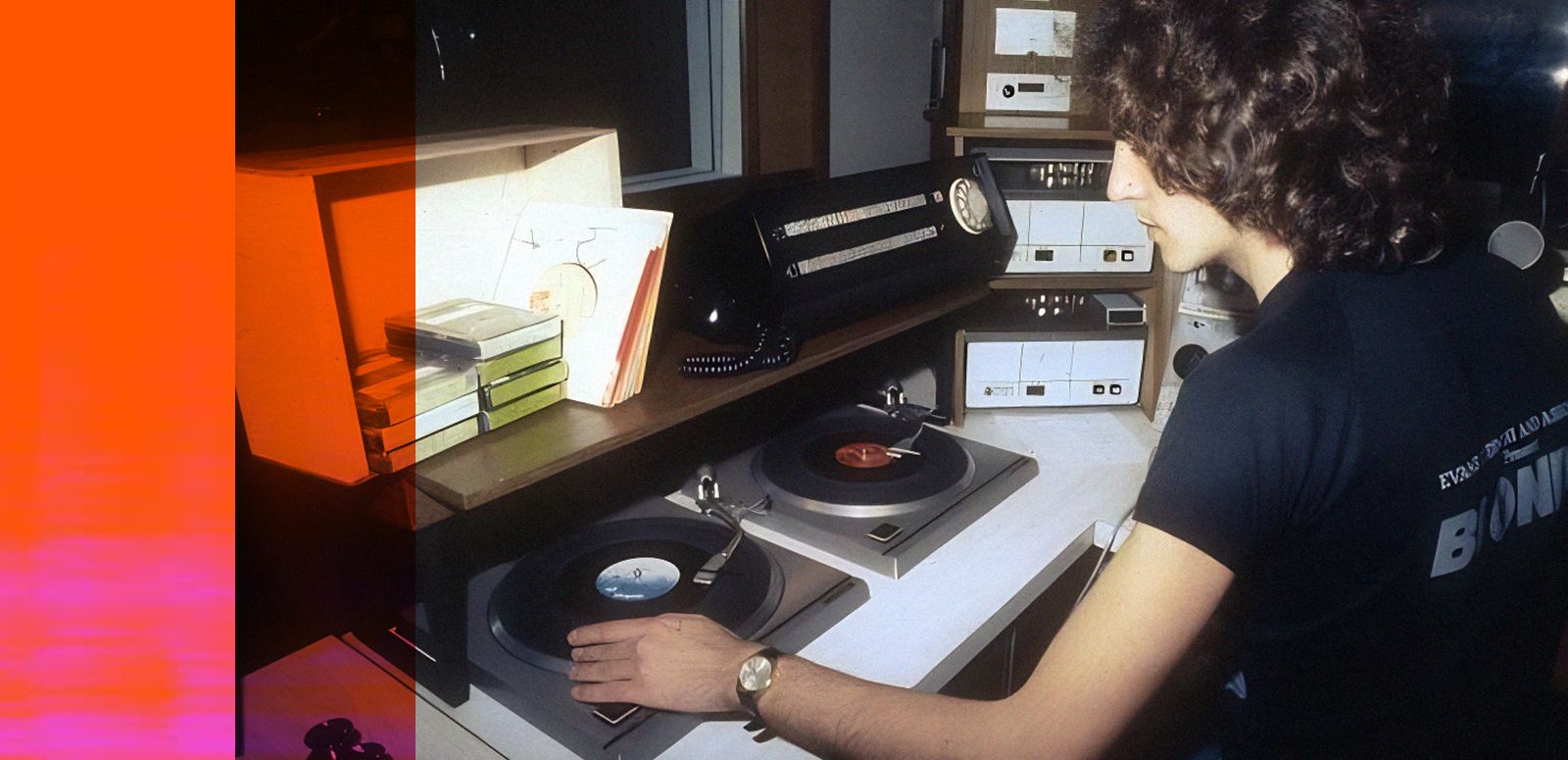
Main image: Richard Kingsmill at the offices of Sydney community radio station 2SER, c1986. Published courtesy of 2SER 107.3.

Collections to explore

  • Pop music

  • 1980s

  • Richard Kingsmill

  • Start your own collection

    A free Your Stuff account allows you to save, organise and share your favourite videos, audio and stories.

More in Stories+

Personalized your experience

Save, create and share

With NFSA Your Stuff