We acknowledge Australia’s Aboriginal and Torres Strait Islander peoples as the Traditional Custodians of the land on which we work and live and give respect to their Elders, past and present.

Read our Statement of Reflection

Your Cart

Your cart is empty right now...

Discover what's on
Your Stuff
Lists
No lists found
Create list
List name
0 Saved items
Updated: a few seconds ago
Getting Started
Get started with Your Stuff

A free Your Stuff account allows you to save, list and share your favourite collection items and articles. This account will give you access to Your Stuff, NFSA Player and Pro. You will need to create an additional account for Canberra event tickets.

Confirm
Skip to main content
National Film and Sound Archive of AustraliaNational Film and Sound Archive
National Film and Sound Archive of Australia
National Film and Sound Archive
National Film and Sound Archive of Australia
National Film and Sound Archive

Black and Deadly Women of Australian Music: A Survey

First Nations Female Music stars

The black and deadly women of Australian music, from Fanny Smith in the 1890s to Jessica Mauboy in the 21st century.

Written by Sophia Sambono
23 May, 2014
4 minute read

WARNING: this article contains names, images or voices of deceased Aboriginal and Torres Strait Islander people.

Sophia Sambono, Curator Indigenous Collections, surveys the black and deadly women of Australian music, from Fanny Smith in the 1890s to Jessica Mauboy in the 21st century.

Black and white image of 50s jazz and blues singer Georgia Lee pictured with unknown guitarist

Georgia Lee, 1949. Unknown photographer. Courtesy of Karl Neuenfeldt.

Indigenous music and dance are an integral part of ongoing Indigenous traditional cultural practice. They equally hold a significant place in contemporary and urban settings for Indigenous and non-Indigenous people alike.

The earliest recordings of Indigenous music were largely ethnographic with a focus on traditional songs and language. Early wax cylinder recordings include those made in the Torres Strait by AC Haddon, and of Fanny Smith in Tasmania (see gallery).

New technology improved the ease of recording and dissemination of music, contributing to a greater availability of popular music which in turn influenced Indigenous contemporary recordings. Peter Dunbar-Hall and Chris Gibson write in Deadly Sounds, Deadly Places (2004) that ‘Aboriginal people have consumed and performed folk music, gospel and choral music for at least a century, and country music for over 50 years’.

Trends in Indigenous contemporary music have run parallel with international music trends particularly those associated with transnational black culture such as jazz, reggae, hip hop and R&B. With the arrival of US troops in the 1940s the soldiers’ enthusiasm for jazz and blues quickly spread, as did Australian Indigenous identification with the fight for equal rights in America.

Black and Deadly

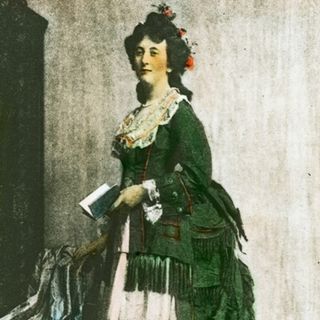
Fanny Cochrane Smith and Horace Watson
Fanny Smith and Horace Watson, 1903. Photograph courtesy of the Tasmanian Museum and Art Gallery. Fanny Smith's wax recordings are the only recorded example of Tasmanian Aboriginal songs or of any Tasmanian Aboriginal language.
Georgia Lee
Georgia Lee, 1949. Unknown photographer. Courtesy of Karl Neuenfeldt. Georgia Lee, born Dulcie Pitt, became an identity in the jazz and blues clubs of Sydney and Melbourne in the 1950s where she performed with well-known bands.
Wilma Reading
Wilma Reading, c1960s. Courtesy of the Australian Broadcasting Corporation Library Sales. Following in the footsteps of her aunt Georgia Lee, Wilma Reading's jazz ambition took her around the world.
Auriel Andrew
Auriel Andrew, c1970s. Courtesy of the Australian Broadcasting Corporation Library Sales. An Arrente woman from Alice Springs, Auriel Andrew began her musical career in the late 1960s.
Ruby Hunter
Ruby Hunter, 1988. Photograph by Jacqueline Mitelman. Courtesy of Jacqueline Mitelman and the National Library of Australia.
Tiddas
Tiddas, 1992. Photograph courtesy of the Australian Broadcasting Corporation Library Sales. Tiddas, featuring Lou Bennett, Amy Saunders and Sally Dastey, was one of the very first Aboriginal and Torres Strait Islander women's musical groups.

From Country to Cooking

Country music, with its universal themes of love, loss and affinity with the land, provides much common ground across racial barriers. It reaches fever pitch popularity in 1970s Australia and remains an enduring tradition for many Indigenous people, particularly in rural areas.

The 1980s saw Indigenous male rock and reggae bands rise in popularity, the Warumpi Band and Yothu Yindi the most famous among them. The recording of Indigenous contemporary music was expanding from being recorded only on specialist Aboriginal labels to larger, and even major, music labels. Ruby Hunter was the first Indigenous woman to be recorded on a major record label, in 1989.

The 1990s saw the fight for Indigenous rights and self-determination in the 70s and 80s bear fruit. The popularity of male-dominated bands paved the way for making Indigenous music more acceptable to wider audiences, and women performers began to make their mark.

In 1990 Melbourne’s Hot Jam Cooking festival was set up as a space for Aboriginal and non-Aboriginal women performers in a white, male-dominated industry. Ruby Hunter performed as well as the trio soon to be dubbed Tiddas. This festival sought to rebalance the uneven gender relations in the mainstream music industry where, according to Deadly Sounds, Deadly Places, ‘Gendered notions of musicianship, credibility and musical skill work against women’.

Black and Deadly II

Christine Anu
Christine Anu, 1993. Photograph Courtesy of the Australian Broadcasting Corporation Library Sales. ARIA award-winning Christine Anu is a multi-talented Torres Strait Islander from Cairns.
Stiff Gins
Stiff Gins, 2000. Photograph by Nicole Foreshew. Courtesy of the Stiff Gins. The Stiff Gins are musical duo Nardi Simpson and Kaleena Briggs. Known for positive acoustic melodies in Aboriginal language they began as a trio, including Emma Donovan.
Shakaya
Shakaya, 2002. Self-titled album cover. Shakaya was a two-piece girl group who achieved fame in the early 2000s.
Casey Donovan
Casey Donovan, 2004. Photograph by Ben Symons. Casey Donovan was the youngest and first female winner of Australian Idol, winning the second season at the age of 16.
Jessica Mauboy, 2006
Jessica Mauboy, 2006. Photograph by Amanda James. Courtesy of Amanda James. Jessica Mauboy is a popular R&B artist who was launched into the public arena as a runner-up on Australian Idol in 2006.
Thelma Plum
Thelma Plum, 2012. Photograph by Carine Thevanue. Courtesy of Leanne De Souza. New to the music scene, indie-roots musician Thelma Plum was in the first intake of students to graudate from Brisbane's Music Industry College in 2011.

Musical Mentors

Likewise, the With Open Eyes festival (1992) came at a time when Yothu Yindi, Kev Carmody and other male Aboriginal artists were finally being signed to major labels and finding their audience, but Aboriginal women artists still worked in relative obscurity.

Designed to ‘open the women’s eyes to their own achievements and potential, and to promote the confidence needed to explore all options for a career in music’, the festival also provided mentoring from successful musicians, inspiration from other Indigenous women to become active performing and recording artists, and support from community in building a fan base.

Music mentoring programs which have contributed to a dramatic increase in recording output by Indigenous women include Eora in Sydney, CASM in Adelaide and the ATSIC music college in Cairns.

The 90s trends of pop and folk were taken up by women artists such as Tiddas, but also Christine Anu, Stiff Gins, and Shakaya. Today we still see a strong pop influence as well as a mix of all genres across the board represented in the music industry. You can hear this today in the music of Casey Donovan, Jessica Mauboy and Thelma Plum.

The music business has always been a tough road to travel and the success of these women is even more significant when you consider the obstacles they overcame, including enduring negative perceptions of Indigenous people in post-colonial society and the limited marketability of women’s music.

As Georgia Lee told the press in her heyday, ‘It’s hard to be a woman, but harder still if you are a woman and Black’.

More by Sophia

Collections to explore

More in Stories+

Personalized your experience

Save, create and share

With NFSA Your Stuff