Wattie Creek
2009
Wattie Creek
2009
- NFSA IDJVY5E1P4
- TypeTelevision
- MediumMoving Image
- FormInstructional, Series
- GenresPatriotic, Educational, Historical
- Year2009
- WARNING: Aboriginal and Torres Strait Islander viewers are advised that the following program may contain images and/or audio of deceased persons
This clip is from Australia's Heritage: National Treasures with Chris Taylor and is about Wattie Creek, which entered Australian folklore as the birthplace of the Aboriginal land-rights movement when Prime Minister Gough Whitlam visited the Gurindji people to grant them deeds to their land.
The Gurindji rose to national prominence in 1966 when, led by stockman Vincent Lingiari, 200 Aboriginal employees quit slave-labour conditions at Wave Hill cattle station and walked the now National Heritage-listed Wave Hill Walk-off Route to set up a community at Wattie Creek, which they renamed Daguragu.
The walk-off began a nine-year labour strike that ended with a win for Indigenous land rights.
Did you know:
- The Gurindji strike in 1966 led to a nine-year battle to reclaim traditional land.
- On 15 August 1975 the Gurindji became the first Aboriginal community to have land returned to them by the Commonwealth Government.
- The well-known song first recorded in 1991 by Paul Kelly and Kev Carmody, 'From Little Things Big Things Grow', tells the story of the Gurindji's fight for land rights.
TRANSCRIPT
CHRIS TAYLOR:
Imagine if someone offered you a job with food and board, but the pay, if you got it was a pittance, the accommodation was a tin shed with no sanitation and the food was not much more than flour, sugar and tea. Sounds a bit like slavery doesn't it? Unfortunately for many indigenous Australians in the cattle industry, that's exactly how it once was, but all that changed when one man inspired them to reclaim the land they loved.
That National Treasure lies in the heart of the top end, 460 kilometres south east of Katharine in the Northern Territory. This is Wattie Creek which belongs to the local Gurindji people.
It's a place that became part of Australia's modern folk lore when a Prime Minister came to visit.
And this is the man whose passion and determination inspired that visit. Vincent Lingiari is his name. For most of his life he worked here on what's now known as Old Wave Hill Station. In 1966, with good reason, this gentle stockman turned activist.
He led about 200 Aboriginal workers and their families in a strike when they walked off the station in protest over pay and conditions.
For 80 years the pastoralists' main interest had been acquiring land – Aboriginal land. For them it made no economic sense to respect black labour. There was no shortage of people wanting to work.
The Gurindji watched helplessly as the pastoralists fenced their land, killed their food supplies and destroyed their watering holes. And even worse, they had little choice but to work for the pastoralists under appalling conditions.
When the Gurindji walked off black stockman had become the backbone of the cattle industry. Widespread loss of these cheap labour source threatened the pastoralists. The Gurindji were worried about violent repercussions so they travelled overland following this fence-line, rather than take the road.
What started as a strike became a nine year battle to reclaim their traditional land. The Wave Hill Walk-Off Route is on the National Heritage list.
The Gurindji arrived here in Wattie Creek in 1967, and they named it Daguragu, in their language, a place for us.
Jimmy Wavehill was an Aboriginal stockman at the time of the walk-off.
JIMMY WAVEHILL:
What old Vincent Lingiari told us is you mob going to keep this place for, if anything happen on me. Well I'm just pass- ing the story with Jimmy Wavehill and he can keep it forever and tell stories, so some kids can understand and keep it for their future too.
CHRIS TAYLOR:
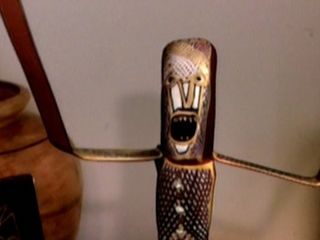
This was always Gurindji land, the place of their dreaming, and now they can visit and maintain their sacred sites and places of ritual. But they needed a modern symbol of their ownership. The pastoralists respected signs, so the Gurindji had one made to announce their presence. What they wanted was title to their land and economic independence.
In the years the Gurindji lived at Daguragu, they were threatened with economic sanctions and had numerous land claims rejected. But the breakthrough came in 1972.
The ALP was back in power after 23 years in opposition and Aboriginal Land Rights was a hot issue.
GOUGH WHITLAM:
We will legislate to give Aborigines land rights.
CHRIS TAYLOR sync:
Although full land rights legislation came later, the culmination of the Gurindji's battle has been immortalised in that image of Gough Whitlam and Vincent Lingiari taken in 1975.
GOUGH WHITLAM:
Vincent Lingiari, I solemnly hand to you these deeds as proof in Australian law, that these lands belong to this Gurindji people.
CHRIS TAYLOR:
Vincent Lingiari put it more simply.
VINCENT LINGIARI:
We're all friendly now. We're all mates. We're all mates.
CHRIS TAYLOR:
Vincent Lingiari was awarded the Medal of Australia for service to his people. Today he's buried on the land he fought so hard for.
The Gurindji's strike was the first to attract widespread attention to Aboriginal Land Rights. That makes Wattie Creek, at the end of the Wave Hill Walk-Off Route, a National Treasure.
- WARNING: Aboriginal and Torres Strait Islander viewers are advised that the following program may contain images and/or audio of deceased persons
This clip is from Australia's Heritage: National Treasures with Chris Taylor and is about Wattie Creek, which entered Australian folklore as the birthplace of the Aboriginal land-rights movement when Prime Minister Gough Whitlam visited the Gurindji people to grant them deeds to their land.
The Gurindji rose to national prominence in 1966 when, led by stockman Vincent Lingiari, 200 Aboriginal employees quit slave-labour conditions at Wave Hill cattle station and walked the now National Heritage-listed Wave Hill Walk-off Route to set up a community at Wattie Creek, which they renamed Daguragu.
The walk-off began a nine-year labour strike that ended with a win for Indigenous land rights.
Did you know:
- The Gurindji strike in 1966 led to a nine-year battle to reclaim traditional land.
- On 15 August 1975 the Gurindji became the first Aboriginal community to have land returned to them by the Commonwealth Government.
- The well-known song first recorded in 1991 by Paul Kelly and Kev Carmody, 'From Little Things Big Things Grow', tells the story of the Gurindji's fight for land rights.
TRANSCRIPT
CHRIS TAYLOR:
Imagine if someone offered you a job with food and board, but the pay, if you got it was a pittance, the accommodation was a tin shed with no sanitation and the food was not much more than flour, sugar and tea. Sounds a bit like slavery doesn't it? Unfortunately for many indigenous Australians in the cattle industry, that's exactly how it once was, but all that changed when one man inspired them to reclaim the land they loved.
That National Treasure lies in the heart of the top end, 460 kilometres south east of Katharine in the Northern Territory. This is Wattie Creek which belongs to the local Gurindji people.
It's a place that became part of Australia's modern folk lore when a Prime Minister came to visit.
And this is the man whose passion and determination inspired that visit. Vincent Lingiari is his name. For most of his life he worked here on what's now known as Old Wave Hill Station. In 1966, with good reason, this gentle stockman turned activist.
He led about 200 Aboriginal workers and their families in a strike when they walked off the station in protest over pay and conditions.
For 80 years the pastoralists' main interest had been acquiring land – Aboriginal land. For them it made no economic sense to respect black labour. There was no shortage of people wanting to work.
The Gurindji watched helplessly as the pastoralists fenced their land, killed their food supplies and destroyed their watering holes. And even worse, they had little choice but to work for the pastoralists under appalling conditions.
When the Gurindji walked off black stockman had become the backbone of the cattle industry. Widespread loss of these cheap labour source threatened the pastoralists. The Gurindji were worried about violent repercussions so they travelled overland following this fence-line, rather than take the road.
What started as a strike became a nine year battle to reclaim their traditional land. The Wave Hill Walk-Off Route is on the National Heritage list.
The Gurindji arrived here in Wattie Creek in 1967, and they named it Daguragu, in their language, a place for us.
Jimmy Wavehill was an Aboriginal stockman at the time of the walk-off.
JIMMY WAVEHILL:
What old Vincent Lingiari told us is you mob going to keep this place for, if anything happen on me. Well I'm just pass- ing the story with Jimmy Wavehill and he can keep it forever and tell stories, so some kids can understand and keep it for their future too.
CHRIS TAYLOR:
This was always Gurindji land, the place of their dreaming, and now they can visit and maintain their sacred sites and places of ritual. But they needed a modern symbol of their ownership. The pastoralists respected signs, so the Gurindji had one made to announce their presence. What they wanted was title to their land and economic independence.
In the years the Gurindji lived at Daguragu, they were threatened with economic sanctions and had numerous land claims rejected. But the breakthrough came in 1972.
The ALP was back in power after 23 years in opposition and Aboriginal Land Rights was a hot issue.
GOUGH WHITLAM:
We will legislate to give Aborigines land rights.
CHRIS TAYLOR sync:
Although full land rights legislation came later, the culmination of the Gurindji's battle has been immortalised in that image of Gough Whitlam and Vincent Lingiari taken in 1975.
GOUGH WHITLAM:
Vincent Lingiari, I solemnly hand to you these deeds as proof in Australian law, that these lands belong to this Gurindji people.
CHRIS TAYLOR:
Vincent Lingiari put it more simply.
VINCENT LINGIARI:
We're all friendly now. We're all mates. We're all mates.
CHRIS TAYLOR:
Vincent Lingiari was awarded the Medal of Australia for service to his people. Today he's buried on the land he fought so hard for.
The Gurindji's strike was the first to attract widespread attention to Aboriginal Land Rights. That makes Wattie Creek, at the end of the Wave Hill Walk-Off Route, a National Treasure.
- NFSA IDJVY5E1P4
- TypeTelevision
- MediumMoving Image
- FormInstructional, Series
- GenresPatriotic, Educational, Historical
- Year2009
CHRIS TAYLOR:
Imagine if someone offered you a job with food and board, but the pay, if you got it was a pittance, the accommodation was a tin shed with no sanitation and the food was not much more than flour, sugar and tea. Sounds a bit like slavery doesn’t it? Unfortunately for many indigenous Australians in the cattle industry, that’s exactly how it once was, but all that changed when one man inspired them to reclaim the land they loved.
That National Treasure lies in the heart of the top end, 460 kilometres south east of Katharine in the Northern Territory. This is Wattie Creek which belongs to the local Gurindji people.
It’s a place that became part of Australia’s modern folk lore when a Prime Minister came to visit.
And this is the man whose passion and determination inspired that visit. Vincent Lingiari is his name. For most of his life he worked here on what’s now known as Old Wave Hill Station. In 1966, with good reason, this gentle stockman turned activist.
He led about 200 Aboriginal workers and their families in a strike when they walked off the station in protest over pay and conditions.
For 80 years the pastoralists’ main interest had been acquiring land – Aboriginal land. For them it made no economic sense to respect black labour. There was no shortage of people wanting to work.
The Gurindji watched helplessly as the pastoralists fenced their land, killed their food supplies and destroyed their watering holes. And even worse, they had little choice but to work for the pastoralists under appalling conditions.
When the Gurindji walked off black stockman had become the backbone of the cattle industry. Widespread loss of these cheap labour source threatened the pastoralists. The Gurindji were worried about violent repercussions so they travelled overland following this fence-line, rather than take the road.
What started as a strike became a nine year battle to reclaim their traditional land. The Wave Hill Walk-Off Route is on the National Heritage list.
The Gurindji arrived here in Wattie Creek in 1967, and they named it Daguragu, in their language, a place for us.
Jimmy Wavehill was an Aboriginal stockman at the time of the walk-off.
JIMMY WAVEHILL:
What old Vincent Lingiari told us is you mob going to keep this place for, if anything happen on me. Well I’m just pass- ing the story with Jimmy Wavehill and he can keep it forever and tell stories, so some kids can understand and keep it for their future too.
CHRIS TAYLOR:
This was always Gurindji land, the place of their dreaming, and now they can visit and maintain their sacred sites and places of ritual. But they needed a modern symbol of their ownership. The pastoralists respected signs, so the Gurindji had one made to announce their presence. What they wanted was title to their land and economic independence.
In the years the Gurindji lived at Daguragu, they were threatened with economic sanctions and had numerous land claims rejected. But the breakthrough came in 1972.
The ALP was back in power after 23 years in opposition and Aboriginal Land Rights was a hot issue.
GOUGH WHITLAM:
We will legislate to give Aborigines land rights.
CHRIS TAYLOR sync:
Although full land rights legislation came later, the culmination of the Gurindji’s battle has been immortalised in that image of Gough Whitlam and Vincent Lingiari taken in 1975.
GOUGH WHITLAM:
Vincent Lingiari, I solemnly hand to you these deeds as proof in Australian law, that these lands belong to this Gurindji people.
CHRIS TAYLOR:
Vincent Lingiari put it more simply.
VINCENT LINGIARI:
We’re all friendly now. We’re all mates. We’re all mates.
CHRIS TAYLOR:
Vincent Lingiari was awarded the Medal of Australia for service to his people. Today he’s buried on the land he fought so hard for.
The Gurindji’s strike was the first to attract widespread attention to Aboriginal Land Rights. That makes Wattie Creek, at the end of the Wave Hill Walk-Off Route, a National Treasure.
Need to license this item? A/V professionals and researchers can shortlist licensing enquiries via our NFSA Pro catalogue search and membership.
Collections to explore

First Nations Activism

Native Title



Stolen Generations
Start your own collection
A free Your Stuff account allows you to save, organise and share your favourite videos, audio and stories.


