The Joys of the Women Italy revisited (1993)
1993
The Joys of the Women Italy revisited (1993)
1993
- NFSA IDD2NXTB87
- TypeTelevision
- MediumMoving Image
- FormDocumentary, Music
- Duration55 mins
- GenresEthnographic, Folk music
- Year1993
Kavisha Mazzella visits Italy to find traditional songs. She interviews musicologist Professor Ugo Vuoso about how the songs are recorded for posterity
Kavisha Mazzella visits Italy to find traditional songs. She interviews musicologist Professor Ugo Vuoso about how the songs are recorded for posterity
- NFSA IDD2NXTB87
- TypeTelevision
- MediumMoving Image
- FormDocumentary, Music
- Duration55 mins
- GenresEthnographic, Folk music
- Year1993
- Production companyElectric Pictures and Realworld Pictures
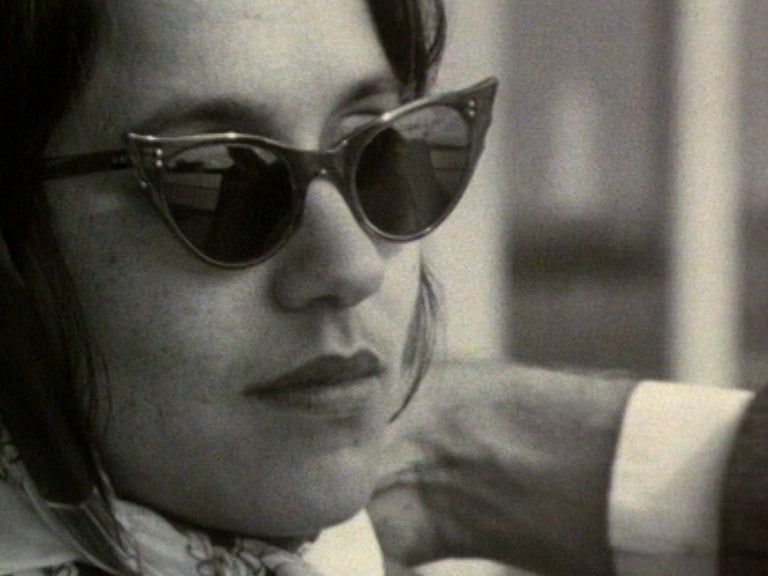
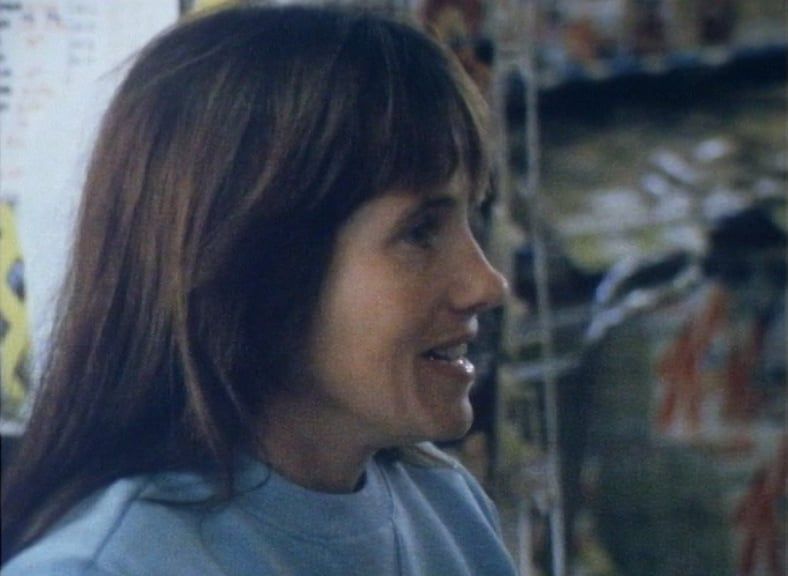
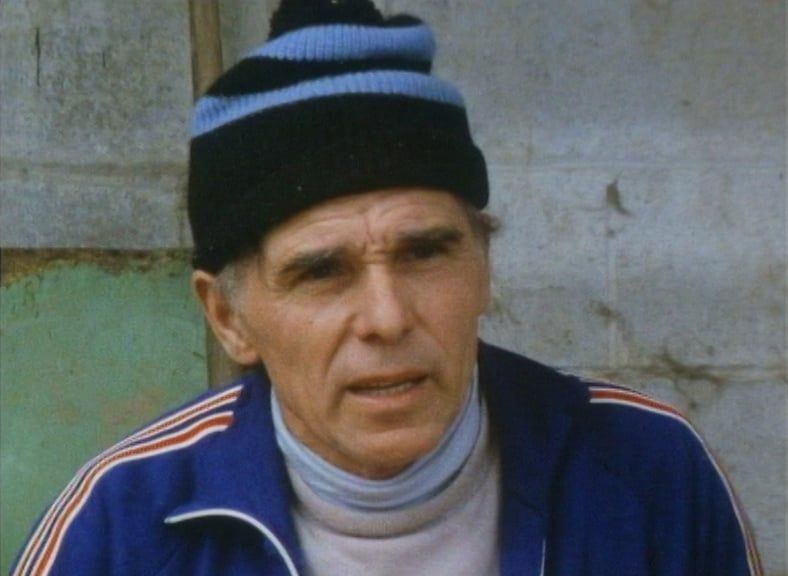
This clip shows singer–songwriter Kavisha Mazzella in Ischia, an island in the Mediterranean off the coast of Italy near Naples, where she went to record traditional folk songs. Mazzella is shown arriving by ferry to be met by her father and grandmother. In a voice-over she explains that, as a teenager, she rejected her Italian heritage, but now wants to keep what she sees as a dying music tradition alive by recording and performing it. She is then seen speaking to musicologist Professor Ugo Vuoso, who records and studies the music of Naples and the Mediterranean region. The clip includes footage of Ischia and traditional folk music performed and sung by Mazzella.
Educational value points
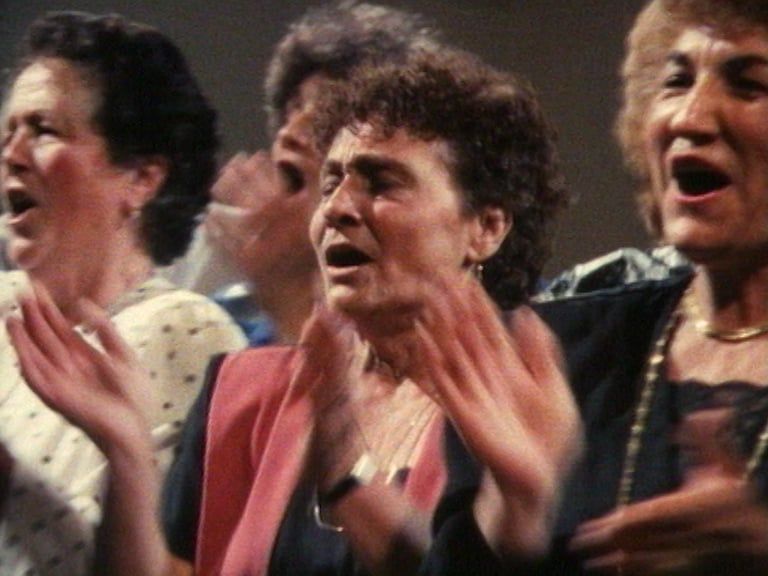
- The film The Joys of the Women took its name from The Joys of the Women choir, based in Fremantle, Western Australia, which performs Italian traditional folk songs. The choir formed in 1988 when Mazzella, then part of an Italian folk group called I Papaveri, performed for a group of Italian immigrant women who spontaneously joined in. Mazzella recalls, 'their voices were really strong … the land and the earth were in their voices’. The film traces the choir’s collaboration with Mazzella, their experiences as immigrant women and Mazzella’s quest to document Italian traditional folk music.
- The clip refers to Italian folk music as a dying tradition. These songs were sung in the home, by peasants in the field or by fishermen on their boats, and were passed from generation to generation. On her return to Ischia, Mazzella found that most islanders had little interest in or knowledge about traditional music, which was often dismissed as unsophisticated or old fashioned, whereas for the women in the choir it provides a connection to their homeland. Professor Vuoso says, however, that the songs are still sung by women at festivals.
- Mazzella set out to record traditional songs from the Naples region. She returned from her visit with six new songs to add to the choir’s repertoire, which already consisted of reconstructed songs that choir members remembered from childhood. Some of the choir’s songs are no longer sung in Italy, or are only performed at ceremonies or festivals. The choir has a sense that they are keeping alive a dying tradition. Migrants tend to uphold the traditions of the homeland more faithfully after they have left, out of a sense of nostalgia, even though that homeland’s culture continues to change in their absence.
- Mazzella explains that, as a teenager, she rejected her Italian heritage. In the period following the Second World War, immigrants were expected to assimilate into Australian culture and were sometimes discriminated against because of difference. Children of immigrants were often the target of racism or bullying, particularly at school, and many suppressed their ethnicity in order to fit in. Since the 1970s the Australian Government’s policy of multiculturalism has promoted acceptance of immigrant and minority groups as distinct communities.
- The film documents Mazzella’s journey of self-discovery as she travels back to her ancestral village. Mazzella recalls that as a child she listened to her grandmother sing traditional songs and, while she rejected her heritage in adolescence, as an adult she embraces her Italian background. Through this journey and her work with the choir, Mazzella came to understand the importance of traditional songs in celebrating that heritage. In 1993 Mazzella released an album, The Joys of the Women, to coincide with the release of this documentary.
- The Joys of the Women is an example of the work of director Franco di Chiera who, like Mazzella, is the child of Italian immigrants. While di Chiera went through a period of rejecting his heritage, much of his work as a filmmaker has explored the effect of Italian immigrant culture in Australia and the immigrant experience. He comments that 'if Kavisha and I had been spared the pressures of assimilation which were so strong when we were growing up in Australia of the 1960s, we might not have felt this drive to know more’.
Need to license this item? A/V professionals and researchers can shortlist licensing enquiries via our NFSA Pro catalogue search and membership.
Collections to explore
.jpg?w=320&h=240&auto=format)
Documentary



1990s


Feature film
Start your own collection
A free Your Stuff account allows you to save, organise and share your favourite videos, audio and stories.
.jpg?w=640&h=480&auto=format)


.jpg?fp-x=0.3802083333333333&fp-y=0.34817708333333336&w=640&h=485&fit=crop&crop=focalpoint&auto=format)
.jpg?fp-x=0.5266927083333334&fp-y=0.27847222222222223&w=640&h=485&fit=crop&crop=focalpoint&auto=format)
.jpg?fp-x=0.4416243654822335&fp-y=0.28671875&w=640&h=485&fit=crop&crop=focalpoint&auto=format)
.jpg?fp-x=0.4631979695431472&fp-y=0.3498263888888889&w=640&h=485&fit=crop&crop=focalpoint&auto=format)