Talkback Classroom Learning Journeys - Indigenous Representation Forum: Remembering Eddie Mabo
2007
Talkback Classroom Learning Journeys - Indigenous Representation Forum: Remembering Eddie Mabo
2007
- WARNING: Aboriginal and Torres Strait Islander viewers are advised that the following program may contain images and/or audio of deceased persons
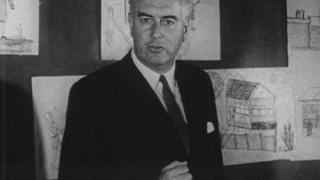
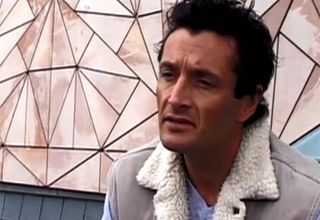
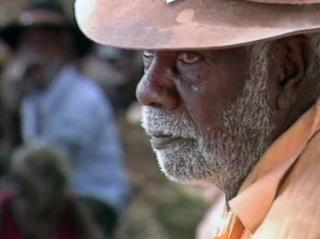
Aboriginal elder and teacher Douglas Bon remembers Eddie Mabo and the landmark land rights case he fought.
- WARNING: Aboriginal and Torres Strait Islander viewers are advised that the following program may contain images and/or audio of deceased persons
Aboriginal elder and teacher Douglas Bon remembers Eddie Mabo and the landmark land rights case he fought.
Aboriginal elder and teacher Douglas Bon discusses with the students that when the government claimed that the land his people lived on in the Torres Straits was Crown land, his people were able to provide proof that they had been using the land for countless generations, even able to show the boundaries of this land.
Bon emphasises that it was important to fight for the rights to this land. Otherwise, someone else could come in and impose their laws upon them. Eddie Mabo was the man who fought for these rights and won, setting a precedent for Indigenous land rights that has had an enormous effect on Indigenous rights in Australia.
Talkback Classroom Learning Journeys - Indigenous Representation Forum synopsis
Talkback Classroom is a forum program run by the Education section of the National Museum of Australia.
These clips come from a 2007 forum on Indigenous representation. The guest interviewed was former Minister for Families, Community Services and Indigenous Affairs, The Hon. Mal Brough MP. Panellists were Northern Territory Year 12 students Brendon Kassman, Danielle Lede and Esmeralda Stephenson from Casuarina Senior College, Darwin.
Talkback Classroom Learning Journeys - Indigenous Representation Forum curator's notes
In 1967 the overwhelming majority of Australians gave the federal government a clear mandate to implement policies to benefit Aborigines. How far have we come?
The learning journey involved students exploring the collection of Aboriginal art and material culture at the Museum and Art Gallery of the Northern Territory in Darwin and interviewing senior curator Franchesca Cubillo.
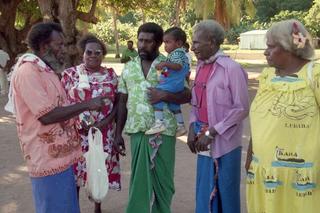
They also interviewed Douglas Bon, skin group brother of Eddie Mabo, and Marion Scrymgour, Member for Arafura in the Northern Territory Parliament. The learning journey also included a visit to Gunbalunya (Oenpelli) Indigenous community in West Arnhem Land and an interview with the area’s local elders.
The European colonisation of Australia has had a great impact on Aboriginal and Torres Strait Islander Australians. Many meetings between European and Aboriginal cultures were unsuccessful: Aboriginal disenfranchisement and the effects of white society resulted in inequalities and tensions. By as early as 1869 the colonies began to remove Aboriginal children from their families in an effort to assimilate them and ‘protect’ them.
During Federation and the drafting of the nation’s constitution, reference to Aboriginal people was made only twice: Aboriginal people were to be managed by state authorities, not the Commonwealth, and they were not to be counted in the national census.
National discussion between 1910 and the 1960s debated the wisdom of Indigenous welfare being managed in this way. This debate intensified during the 1960s. Key events of the 1960s that informed the growing national awareness of the state of Indigenous people in Australia included the Yolngu people’s 1963 presentation of the Yirrkala bark petition to the Commonwealth Government, the 1965 freedom ride and the 1966 Wave Hill walk-off.
In 1967 a national referendum was held and 90.77 per cent of Australian people voted 'yes' to giving Aboriginal people the right to be counted in the census and granting the Commonwealth Government the capacity to legislate for Aboriginal and Torres Strait Islander people.
Initially, change occurred slowly following the referendum, and partly as a result the Aboriginal tent embassy was erected on the lawns of Parliament House in Canberra in 1972. By 1976 the Northern Territory Land Rights Act had been passed; in 1994 the landmark Commonwealth Native Title Act was also passed and in 1990 ATSIC was established as the peak body for Indigenous Australians.
The Howard government introduced the Amendment to Native Title Act in 1998 and ATSIC was disbanded in 2005 following allegations of mismanagement. Under the Howard government ‘practical reconciliation’ was emphasised with a particular focus on Indigenous health, education, housing and employment.
An increasing concern over rates of crime and abuse in Indigenous communities led to the Northern Territory intervention policy. In 2008 the Rudd Labor government issued a national apology to the children of the stolen generations.
Teacher's notes designed for NFSA digital learning
Classroom Activities
Before you watch
- On a map of Australia locate the Torres Strait and Murray Island.
- Discuss and define Land Rights. Do you think that many Australians understand what Native Title is? Why do you think many people were worried by Native Title? Was this concern justified? Explain why you think it was or wasn’t.
- Discuss and find out who Eddie Mabo is and why he is important to Australian history generally and more specifically the history of indigenous land rights in Australia.
While you watch
- What relation is Douglas Bon to Eddie Mabo? How does he describe this relationship?
- Why does Douglas say it is important to retain and maintain the land?
After you watch
- Research the life of Eddie Mabo and create a poster display. Make sure you research his work on land rights and his personal life.
- Research and discuss the Mabo case. Imagine you are a newspaper journalist attending the court case that is shown in the clip. Write a short editorial, commenting on the decision, its importance and the impact you think it will have on Australia.
Need to license this item? A/V professionals and researchers can shortlist licensing enquiries via our NFSA Pro catalogue search and membership.
Collections to explore

Schools and universities

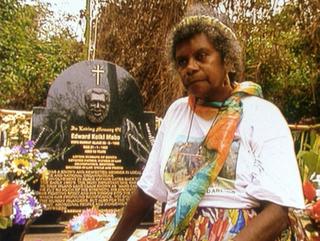
Eddie Mabo land rights case
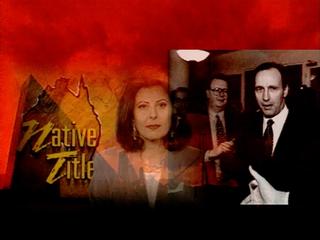
Native Title
Start your own collection
A free Your Stuff account allows you to save, organise and share your favourite videos, audio and stories.


