The Springboks at Manuka Oval, 1971
1971
The Springboks at Manuka Oval, 1971
1971
- NFSA ID771WV88A
- TypeTelevision
- MediumMoving Image
- FormSeries
- Duration11 mins, 27 secs
- GenresNews
- Year1971
For the first time in Australia’s history the field of sport became a political arena when the South African Springboks came to Australia for a six-week tour at the height of their country’s apartheid policy.
Throughout their Australian tour, the Springboks faced demonstrations and trade union bans over South Africa’s apartheid policy. The team was forced to travel in small planes by regional carrier Hazelton Airlines, after Qantas and TAA refused to carry them.
After violent clashes between police and demonstrators in the other capital cities (a state of emergency was declared by Queensland Premier Joh Bjelke-Petersen), ACT police met with members of the Canberra Anti-Apartheid Committee, chaired by Michael Wright, to reduce the risk of violence at the match. Four hundred police came from NSW to assist local police. Bomb threats were received concerning the Goulburn-Canberra railway line and also the Department of Supply building, which was evacuated as a result.
A seven-foot (2.13 metres) high fence was erected around the boundary at Manuka Oval. Bags of sand were placed over large gratings and smaller gratings welded into place so they couldn’t be used as weapons. Liquor, soft drink cans and bottles were banned from the grounds. Patrons could be searched by police during entry.
On game day, 21 July, demonstrators grouped themselves around the ground and chanted ‘Go home racist’ (clearly audible throughout the above clip). Mark Davison, an ACT second rower who had refused to be considered for selection in the team, handed out anti-tour, anti-apartheid leaflets to spectators. Protesters threw two smoke bombs on the field.
Police made 49 arrests, including nine women and executive member of the ACT Civil Liberties Council, Ken Fry. Observers complained about rough police treatment and arrests being arbitrary and unreasonable.
For the first time in Australia’s history the field of sport became a political arena when the South African Springboks came to Australia for a six-week tour at the height of their country’s apartheid policy.
Throughout their Australian tour, the Springboks faced demonstrations and trade union bans over South Africa’s apartheid policy. The team was forced to travel in small planes by regional carrier Hazelton Airlines, after Qantas and TAA refused to carry them.
After violent clashes between police and demonstrators in the other capital cities (a state of emergency was declared by Queensland Premier Joh Bjelke-Petersen), ACT police met with members of the Canberra Anti-Apartheid Committee, chaired by Michael Wright, to reduce the risk of violence at the match. Four hundred police came from NSW to assist local police. Bomb threats were received concerning the Goulburn-Canberra railway line and also the Department of Supply building, which was evacuated as a result.
A seven-foot (2.13 metres) high fence was erected around the boundary at Manuka Oval. Bags of sand were placed over large gratings and smaller gratings welded into place so they couldn’t be used as weapons. Liquor, soft drink cans and bottles were banned from the grounds. Patrons could be searched by police during entry.
On game day, 21 July, demonstrators grouped themselves around the ground and chanted ‘Go home racist’ (clearly audible throughout the above clip). Mark Davison, an ACT second rower who had refused to be considered for selection in the team, handed out anti-tour, anti-apartheid leaflets to spectators. Protesters threw two smoke bombs on the field.
Police made 49 arrests, including nine women and executive member of the ACT Civil Liberties Council, Ken Fry. Observers complained about rough police treatment and arrests being arbitrary and unreasonable.
- NFSA ID771WV88A
- TypeTelevision
- MediumMoving Image
- FormSeries
- Duration11 mins, 27 secs
- GenresNews
- Year1971
Need to license this item? A/V professionals and researchers can shortlist licensing enquiries via our NFSA Pro catalogue search and membership.
Collections to explore

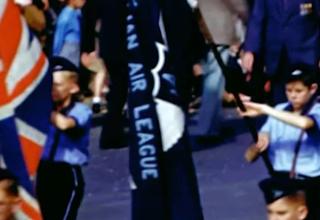

Demonstrations, rallies and marches
1970s
Cultural diversity
Start your own collection
A free Your Stuff account allows you to save, organise and share your favourite videos, audio and stories.


