The Quiet Room: Adults behaving like children
1996
The Quiet Room: Adults behaving like children
1996
- NFSA IDCXXGKAEZ
- TypeFilm
- MediumMoving Image
- FormFeature Film
- Duration1 hr, 29 mins
- GenresDrama
- Year1996
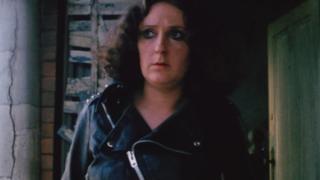
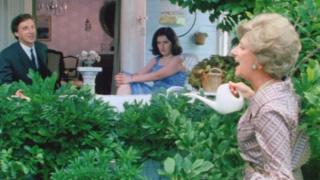
The mother (Celine O’Leary) loses patience with her daughter’s silence, declaring that she won’t live in a pigsty any longer. The father (Paul Blackwell) tries to cheer her up with an offer to cook – but the mother has the dinner already planned. The girl (Chloe Ferguson) renews her stubborn determination to bring her parents back together by her silence. Summary by Paul Byrnes.
The mother (Celine O’Leary) loses patience with her daughter’s silence, declaring that she won’t live in a pigsty any longer. The father (Paul Blackwell) tries to cheer her up with an offer to cook – but the mother has the dinner already planned. The girl (Chloe Ferguson) renews her stubborn determination to bring her parents back together by her silence. Summary by Paul Byrnes.
- NFSA IDCXXGKAEZ
- TypeFilm
- MediumMoving Image
- FormFeature Film
- Duration1 hr, 29 mins
- GenresDrama
- Year1996
- Production companyFandango AustraliaProducersDomenico Procacci, Rolf de HeerDirectorRolf de HeerWriterRolf de HeerMusicGraham Tardif
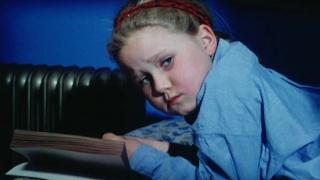
Much of the film is shot from low angles to approximate the child’s height. The deep shadows across the mother’s face suggest a dark anger, and de Heer uses shadows on walls to suggest scary monsters. We often see these shadows before one of the adults enters the room. The contest of wills intensifies in this scene and it’s a three-way struggle in which the child is at least as determined – and probably more cunning – than the adults.
The Quiet Room synopsis
A seven-year-old girl (Chloe Ferguson) refuses to speak. We hear her thoughts in a constant and perceptive monologue, but she will not talk to her parents (Celine O’Leary and Paul Blackwell). A series of flashbacks shows that their increasingly vicious arguments are partly to blame, but they are not the whole story. The girl’s memory of herself at age three (where she’s played by Phoebe Ferguson) suggests that her silence is, in part, a revolt against growing up.
The Quiet Room curator's notes
Rolf de Heer conceived, wrote and directed The Quiet Room very quickly while waiting to get a much larger project off the ground (Epsilon, 1995), but that may have helped to heighten the film’s intensity. He has said he was interested in depicting a seven-year-old’s perception of adulthood, but the film is as much about the way the girl perceives herself, and her transition from very small and happy, to bigger and less happy. Further along in that path of transitions, she perceives that her parents, both of whom love her, are very clearly unhappy.
The film can be described as a depiction of a marriage break-up through a child’s eyes, or equally, the rebellion of a child faced with her own sense of helplessness. Either way, it’s a remarkably effective and imaginative film, with an intense emotional landscape. Chloe Ferguson’s performance is astonishing, but part of that is the way that de Heer uses her monologue. It’s recorded to sound very intimate and personal, like a whispered journal. De Heer used his own children to help with the writing – 'At one point when I was writing, it was the school holidays. I would talk to my kids, particularly my seven-year-old. I would have sessions with them, trying to explore the way they thought, all the time remembering how I used to think when I was a kid’.
Notes by Paul Byrnes
Need to license this item? A/V professionals and researchers can shortlist licensing enquiries via our NFSA Pro catalogue search and membership.
Collections to explore


Domestic life

Young adult
Rebellions and riots
Start your own collection
A free Your Stuff account allows you to save, organise and share your favourite videos, audio and stories.


