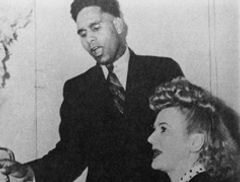
My Country read by Dorothea Mackellar
1958
My Country read by Dorothea Mackellar
1958
- NFSA IDX12WBJE2
- TypeMusic and Sound Recordings
- MediumAudio
- FormSpoken word
- GenresPoetry
- Year1958
Dorothea Mackellar recites the first stanza of her most famous poem, recorded in 1958.
Summary by Paul Byrnes
CURATOR'S NOTES
One interesting aspect of the recording is Mackellar's accent, which retains traces of Scottish pronunciation. Her ancestors were indeed Scots, but she was a third-generation Australian. It is possible that this is part of her 'performance' of the poem, rather than her natural accent. She is certainly giving a performance: note the way she rolls her 'r's. The Scots burr can be heard distinctly in the way she says 'brown'. It's likely that Mackellar was influenced by Scottish romantic and patriotic poetry in the way she approached 'My Country'. We are indebted also to this recording for telling us the correct pronunciation of the poet's name – she calls herself Doro-thea, not Doro-thee.
My Country synopsis
Dorothea Mackellar reads her most famous poem 'My Country' in 1958.
Curator's notes
Dorothea Mackellar was about 73 when this recording was made, by Hazel de Berg, an oral history collector for the National Library of Australia. The poem was by then extremely well known, and so was the poet, although she had not written anything since 1926, the year her father died. It is difficult therefore to hear the extreme youthfulness that the poem originally had.
Mackellar wrote her first draft in London around 1904 when she was 19 and homesick for Australia. She was already a young woman of accomplishment – privately schooled, the daughter of a prominent physician and parliamentarian, Dr Charles Mackellar. She was fluent in four languages, a skilled horsewoman, a frequent visitor to Europe and the continent with her father. She had also spent long periods on the family properties at Gunnedah and the Paterson Valley near Gresford in NSW, where her love of the landscape flowered, along with her sense of romance and adventure.
Most Australians can recall only the second stanza of the poem, but we hear in this recording the all-important introduction, which sets forth her purpose in writing. She is not just homesick for Australian colours; she is rejecting the notion of many of her contemporaries in Australia that England or Great Britain is home. The love of 'field and coppice' and 'ordered woods and gardens' is not in her veins. That puts the poem firmly in the line of the kind of nationalist poetry that bloomed in Australia in the 1890s, although very little of it was written by 19-year-old girls whose lives had been as protected as hers.
The poem was rewritten many times before it was published in The Spectator in London in 1908. Mackellar varies the version in this recording from other popular versions. In the third stanza, she writes:
The tragic ring-barked forests stark white beneath the moon.
In the 1907–08 version of the poem, written in her notebook (held by the State Library of NSW), she wrote:
The stark white ring-barked forests all tragic 'neath the moon.
The poem was titled 'Core of My Heart' on first publication. It became 'My Country' in Mackellar's first book of poems, The Closed Door, published in Australia in 1911. The poem's popularity is said to have taken off during the First World War. By then, Mackellar was living back in Australia, after several years in England, where she shared lodgings with her childhood friend, Ruth Bedford. She and Bedford co-wrote two romantic adventure novels, in 1912 and 1914. Neither woman married and Bedford continued to write for the rest of her life. Mackellar wrote very little after her father's death in 1926.
Notes by Paul Byrnes
CREDITS
Performer Dorothea Mackellar
Dorothea Mackellar recites the first stanza of her most famous poem, recorded in 1958.
Summary by Paul Byrnes
CURATOR'S NOTES
One interesting aspect of the recording is Mackellar's accent, which retains traces of Scottish pronunciation. Her ancestors were indeed Scots, but she was a third-generation Australian. It is possible that this is part of her 'performance' of the poem, rather than her natural accent. She is certainly giving a performance: note the way she rolls her 'r's. The Scots burr can be heard distinctly in the way she says 'brown'. It's likely that Mackellar was influenced by Scottish romantic and patriotic poetry in the way she approached 'My Country'. We are indebted also to this recording for telling us the correct pronunciation of the poet's name – she calls herself Doro-thea, not Doro-thee.
My Country synopsis
Dorothea Mackellar reads her most famous poem 'My Country' in 1958.
Curator's notes
Dorothea Mackellar was about 73 when this recording was made, by Hazel de Berg, an oral history collector for the National Library of Australia. The poem was by then extremely well known, and so was the poet, although she had not written anything since 1926, the year her father died. It is difficult therefore to hear the extreme youthfulness that the poem originally had.
Mackellar wrote her first draft in London around 1904 when she was 19 and homesick for Australia. She was already a young woman of accomplishment – privately schooled, the daughter of a prominent physician and parliamentarian, Dr Charles Mackellar. She was fluent in four languages, a skilled horsewoman, a frequent visitor to Europe and the continent with her father. She had also spent long periods on the family properties at Gunnedah and the Paterson Valley near Gresford in NSW, where her love of the landscape flowered, along with her sense of romance and adventure.
Most Australians can recall only the second stanza of the poem, but we hear in this recording the all-important introduction, which sets forth her purpose in writing. She is not just homesick for Australian colours; she is rejecting the notion of many of her contemporaries in Australia that England or Great Britain is home. The love of 'field and coppice' and 'ordered woods and gardens' is not in her veins. That puts the poem firmly in the line of the kind of nationalist poetry that bloomed in Australia in the 1890s, although very little of it was written by 19-year-old girls whose lives had been as protected as hers.
The poem was rewritten many times before it was published in The Spectator in London in 1908. Mackellar varies the version in this recording from other popular versions. In the third stanza, she writes:
The tragic ring-barked forests stark white beneath the moon.
In the 1907–08 version of the poem, written in her notebook (held by the State Library of NSW), she wrote:
The stark white ring-barked forests all tragic 'neath the moon.
The poem was titled 'Core of My Heart' on first publication. It became 'My Country' in Mackellar's first book of poems, The Closed Door, published in Australia in 1911. The poem's popularity is said to have taken off during the First World War. By then, Mackellar was living back in Australia, after several years in England, where she shared lodgings with her childhood friend, Ruth Bedford. She and Bedford co-wrote two romantic adventure novels, in 1912 and 1914. Neither woman married and Bedford continued to write for the rest of her life. Mackellar wrote very little after her father's death in 1926.
Notes by Paul Byrnes
CREDITS
Performer Dorothea Mackellar
- NFSA IDX12WBJE2
- TypeMusic and Sound Recordings
- MediumAudio
- FormSpoken word
- GenresPoetry
- Year1958
- PerformerDorothea Mackellar
One interesting aspect of the recording is Mackellar’s accent, which retains traces of Scottish pronunciation. Her ancestors were indeed Scots, but she was a third-generation Australian. It is possible that this is part of her ‘performance’ of the poem, rather than her natural accent. She is certainly giving a performance: note the way she rolls her ‘r’s. The Scots burr can be heard distinctly in the way she says ‘brown’. It’s likely that Mackellar was influenced by Scottish romantic and patriotic poetry in the way she approached ‘My Country’. We are indebted also to this recording for telling us the correct pronunciation of the poet’s name – she calls herself Doro-thea, not Doro-thee.
My Country synopsis
Dorothea Mackellar reads her most famous poem ‘My Country’ in 1958.
Curator's notes
Dorothea Mackellar was about 73 when this recording was made, by Hazel de Berg, an oral history collector for the National Library of Australia. The poem was by then extremely well known, and so was the poet, although she had not written anything since 1926, the year her father died. It is difficult therefore to hear the extreme youthfulness that the poem originally had.
Mackellar wrote her first draft in London around 1904 when she was 19 and homesick for Australia. She was already a young woman of accomplishment – privately schooled, the daughter of a prominent physician and parliamentarian, Dr Charles Mackellar. She was fluent in four languages, a skilled horsewoman, a frequent visitor to Europe and the continent with her father. She had also spent long periods on the family properties at Gunnedah and the Paterson Valley near Gresford in NSW, where her love of the landscape flowered, along with her sense of romance and adventure.
Most Australians can recall only the second stanza of the poem, but we hear in this recording the all-important introduction, which sets forth her purpose in writing. She is not just homesick for Australian colours; she is rejecting the notion of many of her contemporaries in Australia that England or Great Britain is home. The love of ‘field and coppice’ and ‘ordered woods and gardens’ is not in her veins. That puts the poem firmly in the line of the kind of nationalist poetry that bloomed in Australia in the 1890s, although very little of it was written by 19-year-old girls whose lives had been as protected as hers.
The poem was rewritten many times before it was published in The Spectator in London in 1908. Mackellar varies the version in this recording from other popular versions. In the third stanza, she writes:
The tragic ring-barked forests stark white beneath the moon.
In the 1907–08 version of the poem, written in her notebook (held by the State Library of NSW), she wrote:
The stark white ring-barked forests all tragic ‘neath the moon.
The poem was titled ‘Core of My Heart’ on first publication. It became ‘My Country’ in Mackellar’s first book of poems, The Closed Door, published in Australia in 1911. The poem’s popularity is said to have taken off during the First World War. By then, Mackellar was living back in Australia, after several years in England, where she shared lodgings with her childhood friend, Ruth Bedford. She and Bedford co-wrote two romantic adventure novels, in 1912 and 1914. Neither woman married and Bedford continued to write for the rest of her life. Mackellar wrote very little after her father’s death in 1926.
Notes by Paul Byrnes
Need to license this item? A/V professionals and researchers can shortlist licensing enquiries via our NFSA Pro catalogue search and membership.


-magic-lantern-432098.jpg?w=1920&h=2560&auto=format)