Mr Patterns

Mr Patterns
- NFSA ID1680yv78
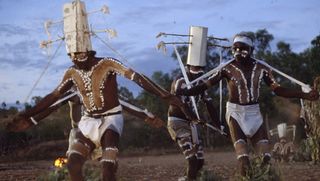
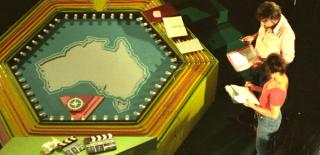
The Papunya Tula (Western Desert) art movement began in 1971 when a Sydney schoolteacher, Geoffrey Bardon, encouraged some of the local First Nations men to paint a mural on a blank school wall. Bardon had been posted as an art teacher to the government settlement at Papunya, 240km north-west of Alice Springs. He suggested the artists paint traditional designs using western materials and, in defiance of white authorities, urged them to value their work commercially as well as spiritually. In 1972, the artists successfully established their own company, which to this day is entirely owned and directed by traditional Aboriginal people from the Western Desert. A Film Australia National Interest Program in association with Reel World Productions. Developed with the assistance of the Australian Film Commission and the NSW Film and Television Office. Developed and produced with the assistance of the Australian Broadcasting Corporation. © National Film and Sound Archive of Australia.
The Papunya Tula (Western Desert) art movement began in 1971 when a Sydney schoolteacher, Geoffrey Bardon, encouraged some of the local First Nations men to paint a mural on a blank school wall. Bardon had been posted as an art teacher to the government settlement at Papunya, 240km north-west of Alice Springs. He suggested the artists paint traditional designs using western materials and, in defiance of white authorities, urged them to value their work commercially as well as spiritually. In 1972, the artists successfully established their own company, which to this day is entirely owned and directed by traditional Aboriginal people from the Western Desert. A Film Australia National Interest Program in association with Reel World Productions. Developed with the assistance of the Australian Film Commission and the NSW Film and Television Office. Developed and produced with the assistance of the Australian Broadcasting Corporation. © National Film and Sound Archive of Australia.
- NFSA ID1680yv78
Need to license this item? A/V professionals and researchers can shortlist licensing enquiries via our NFSA Pro catalogue search and membership.
Collections to explore

Player
Once Upon a Wireless
NFSA interviews and stories
Start your own collection
A free Your Stuff account allows you to save, organise and share your favourite videos, audio and stories.


