Maxonol Gramophone: Buy a Good Gramophone and Keep Her at Home (1925)
1925
Maxonol Gramophone: Buy a Good Gramophone and Keep Her at Home (1925)
1925
- NFSA IDHBNB3KQK
- TypeFilm
- MediumMoving Image
- FormAdvertisement (includes promotional)
- GenresSilent film
- Year1925
This clip shows an entire Maxonol Gramophone cinema advertisement from 1925 in which a couple decide to buy a gramophone to keep their daughter at home.
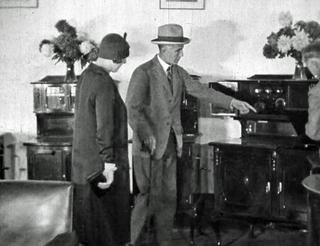
They visit the Maxonol demonstration room and buy a gramophone. Now their daughter stays at home to dance with friends.
The advertisement ends at the Maxonol Gramophone factory, showing workers making the gramophones and gives the store’s address in Sydney.
Summary by Elizabeth Taggart-Speers
This clip shows an entire Maxonol Gramophone cinema advertisement from 1925 in which a couple decide to buy a gramophone to keep their daughter at home.
They visit the Maxonol demonstration room and buy a gramophone. Now their daughter stays at home to dance with friends.
The advertisement ends at the Maxonol Gramophone factory, showing workers making the gramophones and gives the store’s address in Sydney.
Summary by Elizabeth Taggart-Speers
- NFSA IDHBNB3KQK
- TypeFilm
- MediumMoving Image
- FormAdvertisement (includes promotional)
- GenresSilent film
- Year1925
This black-and-white silent cinema advertisement uses a narrative style, common for this type of advertising at the time, and is shot like a slowly paced short film. The advertisement presents a common problem parents have with their teenage daughters, that is keeping them at home, and solves it with the use of the featured product, in this case the Maxonol Gramophone.
Being silent, intertitles are used to provide the viewers with the dialogue between the couple and to set the scene for the visit to the demonstration room and the factory. An intertitle also details product information and gives the store’s address at the end.
Notes by Elizabeth Taggart-Speers
Education Notes
This silent black-and-white clip shows a cinema advertisement for Maxonol gramophones in which a couple sit in their living room as their daughter passes them on her way out. Intertitles record the father saying ‘She’s always out’, and a discussion in which the couple decide to purchase a Maxonol gramophone in an attempt to keep their daughter at home. They visit the Maxonol showroom and purchase a gramophone. The parents are then shown in the living room where their daughter and her friends are dancing to the music of the newly installed machine. The clip ends with scenes of cabinet-makers handcrafting the gramophone cabinets.
Educational value points
- Emile Berliner (1851-1929), a German-American, invented a gramophone in 1887 that featured sound recorded on flat discs or records rather than cylinders. The records were etched with spiral grooves, which held the sound information. This information was then ‘read’ by a needle in the arm of the gramophone. Suddenly mass reproduction of music became possible, revolutionising the way in which music was created, the way in which music was consumed in the home and the music industry as a whole.
- The gramophone changed the way that music could be appreciated at home, as can be seen here. It is now difficult to imagine life without recorded music, but prior to the 20th century orchestral and choral music could only be heard live, in public places. By the end of the 1920s manually wound gramophones and, to a lesser extent, pianolas (pianos that played automatically from a roll of perforated paper) were the only means of reproducing music in the home.
- The arrival of the gramophone in the home was not met with universal approval because, due to its size, it required that owners make changes to the decor of their houses and their lifestyles. Gramophones were later installed in elegant cabinets, as seen in the Maxonol showroom. Gramophones were also thought to be a possible threat to neighbourhood peace. The parents in the clip sacrifice quiet for their daughter’s company.
- The generation gap, which refers to the differences between the attitudes and activities of parents and their children, is illustrated in this clip. In the 1920s women enjoyed a degree of social freedom unknown to earlier generations. They cut their hair short, smoked cigarettes in public and drank cocktails. They went swimming in bathing suits and wore short skirts, which rose to above the knee in about 1927. They danced the foxtrot and the charleston to the music of gramophone records.
- The desire to own a gramophone indicates the early workings of consumer culture. In the decades to follow, gramophones would be replaced by record players, stereos, personal hi-fi systems, walkmans, computers with CD-ROM and DVD players, and personal digital players. Each innovation has been accompanied by promises of better sound quality, such as the ‘human throat’ of the Maxonol.
- This Maxonol advertisement demonstrates the methods of persuasion used by early advertisers. The commercial appeals to parental concerns about daughters going out at night, the status gained by possessing an example of fine craftsmanship, and the need to choose a reliable company capable of thorough service and prompt delivery. The intertitles deliver the main messages and reinforce the visual narrative.
Education notes provided by The Learning Federation and Education Services Australia
Need to license this item? A/V professionals and researchers can shortlist licensing enquiries via our NFSA Pro catalogue search and membership.
Collections to explore



Family tradition


Silent film

Gramophone
Start your own collection
A free Your Stuff account allows you to save, organise and share your favourite videos, audio and stories.


