Lantana: 'What did you say?'
2001
Lantana: 'What did you say?'
2001
- NFSA IDWFEE5DYN
- TypeFilm
- MediumMoving Image
- FormFeature Film
- Duration1 hr, 55 mins
- GenresIndigenous themes or stories, Indigenous as subject, Drama
- Year2001
Upset by a patient, psychiatrist Dr Valerie Somers (Barbara Hershey) attacks a stranger in the street, imagining she heard a remark. The stranger, Pete O’May (Glenn Robbins) seeks refuge in a pub, where he meets Leon Zat (Anthony LaPaglia). Summary by Paul Byrnes.
Upset by a patient, psychiatrist Dr Valerie Somers (Barbara Hershey) attacks a stranger in the street, imagining she heard a remark. The stranger, Pete O’May (Glenn Robbins) seeks refuge in a pub, where he meets Leon Zat (Anthony LaPaglia). Summary by Paul Byrnes.
- NFSA IDWFEE5DYN
- TypeFilm
- MediumMoving Image
- FormFeature Film
- Duration1 hr, 55 mins
- GenresIndigenous themes or stories, Indigenous as subject, Drama
- Year2001
- Production companyJan Chapman ProductionsProducerJan ChapmanDirectorRay LawrenceScreenplayAndrew BovellBased on a stageplay byAndrew BovellMusicPaul KellyCastKerry Armstrong, Rachael Blake, Vince Colosimo, Russell Dykstra, Daniella Farinacci, Barbara Hershey, Anthony LaPaglia, Peter Phelps, Leah Purcell, Glenn Robbins, Geoffrey Rush
This clip starts approximately 46 minutes into the feature.
Night-time. Dr Valerie Somers hurries along a busy city street, looking upset. A man walking in the opposite direction brushes her arm.
Dr Valerie Somers What’d you say?
Pete O’May What?
Valerie You said something to me.
Pete No, I didn’t.
Valerie Yes, you did, you said something to me.
Pete I didn’t say anything.
Valerie addresses diners sitting at outdoor tables.
Valerie You heard him, didn’t you? This man said something to me.
Pete This is bullshit. I didn’t say …
Valerie Bullshit?
Pete Yeah.
Pete turns to walk away. Valerie grabs his sleeve.
Valerie I want your name. Give me your name. (shouts) I want your name!Inside a pub. Leon Zat sits at the bar, lighting a cigarette. He takes a sip from his drink. The door squeaks open. Pete enters. He approaches the bar.
Pete A bourbon, thanks. A double bourbon with ice, thanks.
The barman fetches the drink.
Pete Thanks.
Leon Zat You alright?
Pete Yeah.
Leon You sure, you don’t look alright?
Pete Are you a cop?
Leon Yeah.
Pete Really?
Leon Really.
Pete Sorry, I just … it’s just something really weird happened. I was just walking down the street, this woman started yelling at me. She must have thought I said something to her, I touched her or something.
Leon What for?
Pete I don’t know, I don’t know. I was walking down the street, she just went nuts.
Leon Well, did you?
Pete No! I didn’t do anything. I don’t do stuff like that.
Leon OK, take it easy, I believe you.
Pete Sorry. It was just really weird and now you’re a cop so it’s really, really weird. Sorry.
Leon Want another drink?
Pete Yeah, thanks.
Leon Same again, mate.After his brilliant debut film, Bliss (1985), based on a novel by Peter Carey, director Ray Lawrence spent 15 years trying to get finance for his second film. Several projects failed before he got to make Lantana, but the film did not disappoint – it was a critical and popular success.
Lantana is distinctly different to most contemporary Australian films – sparser, darker, more emotionally mysterious. Sydney is not shown as the beautiful sunny city we’re used to. It’s an urban drama about degrees of trust, with a large ensemble cast, and an utterly serious tone. Andrew Bovell’s script, adapted from his own play, uses coincidence to connect a series of characters who are seemingly unconnected, but going through similar crises of life. The film is partly about the messiness of real relationships, the way that emotions spill over between work, home and leisure. LaPaglia’s detective, for instance, carries his frustrations about home to work with him; Barbara Hershey’s psychiatrist, who’s grieving for a murdered daughter, lashes out at a stranger on the street.
The name of the film confused audiences overseas – and some at home. Lantana is in fact a weed – a thick bush, hard to get rid of, but with a beautiful flower. ‘Once you go past that,’ said Lawrence, ‘it’s all thorns’.
Lantana Synopsis
In the midst of a midlife crisis, detective Leon Zat (Anthony LaPaglia) investigates the disappearance of a prominent psychiatrist, Dr Valerie Somers (Barbara Hershey). Zat suspects her husband John Knox (Geoffrey Rush) of having had a homosexual affair with Patrick Phelan, one of her patients (Peter Phelps). Zat discovers his wife Sonja (Kerry Armstrong) was also a patient. Suspicion then falls on a young unemployed man, Nik Daniels (Vince Colosimo), when a neighbour, Jane O’May (Rachael Blake) reports him. All these lives begin to unravel under the pressure of suspicion.
Notes by Paul Byrnes
Education Notes
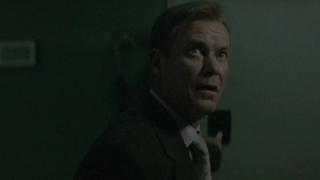
This clip shows Dr Valerie Somers (Barbara Hershey) accusing a passing stranger of saying something to her and demanding to know his name. In the next scene the stranger, Pete O’May (Glenn Robbins), enters a bar where Detective Leon Zat (Anthony LaPaglia) is having a drink. When Leon asks Pete if something is wrong, Pete asks if he is a cop and when Leon admits he is, Pete describes the unsettling encounter with Valerie. The clip cuts between medium close-ups of the two men. Slow guitar music accompanies the clip.
Educational value points
- While the lives of the characters in Lantana intersect as a result of circumstance, they are also linked by a failure to communicate and connect emotionally, and this is demonstrated in this clip by the exchange between Pete and Leon. Pete initially rebuffs Leon, while Leon observes the clearly shaken Pete with the practised eye of a police officer and cannot help but turn their exchange into a form of interrogation, questioning Pete about whether he did anything to Valerie.
- Close-ups, generally used in contemporary filmmaking to invite the audience to feel 'closer’ to the characters and their motivations, are not used in this clip. Rather, the audience is kept at a dispassionate distance with a succession of mid-shots, an effect that mirrors each character’s own sense of disconnection from those around them.
- By cutting between single shots of Leon and Pete, so that they are visually separated, the clip attempts to convey the sense of alienation that affects both men. This is underlined by positioning them on opposite sides of the frame, leaving much of the screen unoccupied, and by the lack of eye contact. Point-of-view shots, taken from one or the other’s perspective are also missing in this scene. Even when Pete and Leon are shown together they are separated by the corner of the bar counter.
- Pete’s interaction with Valerie echoes an earlier scene in the film where Leon collides with a man while jogging. This parallel event opens the way for Pete and Leon to overcome their initial reticence and exchange confidences. The fact that the two men, who are strangers, more readily share confidences with each other in the quintessentially masculine space of a pub rather than with their partners raises questions about masculinity and reflects on the stasis in their personal relationships.
- The distinctive and moody musical motif featured throughout Lantana is used in this clip to heighten the street confrontation, with the beat of the music slowly building as the confrontation escalates. The music then fades out completely in the silence of the almost empty bar, allowing the viewer to focus on the nuances in the exchange between Pete and Leon, including what is said, how it is said, and the body language of the two men.
- Cinematographer Mandy Walker says director Ray Lawrence wanted 'to use only natural light, he didn’t want things to look lit’ (http://www.beyond.com.au). As demonstrated in this clip, the lighting gives the film a moodiness that matches its sombre tone and the murkiness that results from the various entanglements and deceptions. Filmmakers sometimes use natural light to create a sense of authenticity.
- Andrew Bovell, an award-winning playwright and screenwriter, adapted the script for Lantana from his play Speaking in Tongues. Bovell says that Lantana is 'about a search and a yearning for meaning’ and 'about people reaching a particular stage in their lives where they need to question and re-examine how they’re living their life, particularly in the area of love and relationships’ (http://www.beyond.com.au). The script received an Australian Film Institute (AFI) Award for Best Screenplay Adapted from Another Source.
- Anthony LaPaglia received an AFI Award for Best Actor in a Leading Role for the role of Leon Zat in Lantana, regarded by many critics as one of his best performances. LaPaglia moved to the USA in the 1980s where he established himself as a character actor, often playing the 'tough guy’ or cop. He has appeared in a number of Australian films, including Looking for Alibrandi (2000) and The Bank (2001), and is well known to audiences as the lead in the popular US television crime drama Without a Trace (2002–).
- Glenn Robbins, who plays Pete O’May in Lantana, was a stand-up comedian before moving into television where he worked as a performer and writer on comedy sketch programs such as Fast Forward and The Comedy Company. Since 1998 he has been a regular member of The Panel, but is best known for his role as Kel Knight in the popular television comedy Kath and Kim. Lantana was his first dramatic role in a feature film. He has since appeared in the comedy BoyTown (2006).
- Director Ray Lawrence is not a prolific filmmaker, gives actors a lot of artistic freedom and often relies on one 'take’. His films explore universal themes with a distinctly Australian language, idiom and setting. Lantana won seven AFI awards, including Best Film and Best Direction and was the long anticipated follow-up to Lawrence’s first film Bliss (1985), based on Peter Carey’s novel of the same name. Lawrence released his third feature, Jindabyne, in 2006. He also works as a director of television commercials.
Education notes provided by The Learning Federation and Education Services Australia
Need to license this item? A/V professionals and researchers can shortlist licensing enquiries via our NFSA Pro catalogue search and membership.
Collections to explore
True crime
Family tradition
All police
Start your own collection
A free Your Stuff account allows you to save, organise and share your favourite videos, audio and stories.


