Henry Talbot 'Bunny' Hammond: barnstorming
1928
Henry Talbot 'Bunny' Hammond: barnstorming
1928
- NFSA ID4A59WJVN
- TypeFilm
- MediumMoving Image
- FormDocumentary
- Year1928
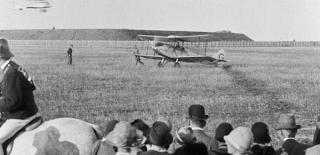
This clip comes from a home movie of Henry Talbot 'Bunny' Hammond and shows him giving joy flights around Bourke and Cobar in August 1928.
A feature of early civil aviation was ‘barnstorming’ – flying from place to place giving members of the public an opportunity to experience flying. Often a pilot would fly over town and perform some aerial stunts or drop leaflets before landing nearby to take on board enthusiastic customers.
Tours of country areas proved popular as crowds would gather for a circuit or pay a little extra for a ‘stunt’. As it was the first time that a plane had landed flying to country areas was hazardous due to the lack of proper landing grounds with the planes having to search first for an appropriate place to land.
The De Havilland moth G-AUGL flown by Hammond in this clip crashed and caught fire at Coonabarabran on 22 August 1928 while taking off in a cross wind. While Hammond walked away uninjured, his passenger sustained two broken ribs.
Hammond was nicknamed Bunny because of his efforts to burrow his way out of captivity whilst a prisoner of war during the First World War.
This clip comes from a home movie of Henry Talbot 'Bunny' Hammond and shows him giving joy flights around Bourke and Cobar in August 1928.
A feature of early civil aviation was ‘barnstorming’ – flying from place to place giving members of the public an opportunity to experience flying. Often a pilot would fly over town and perform some aerial stunts or drop leaflets before landing nearby to take on board enthusiastic customers.
Tours of country areas proved popular as crowds would gather for a circuit or pay a little extra for a ‘stunt’. As it was the first time that a plane had landed flying to country areas was hazardous due to the lack of proper landing grounds with the planes having to search first for an appropriate place to land.
The De Havilland moth G-AUGL flown by Hammond in this clip crashed and caught fire at Coonabarabran on 22 August 1928 while taking off in a cross wind. While Hammond walked away uninjured, his passenger sustained two broken ribs.
Hammond was nicknamed Bunny because of his efforts to burrow his way out of captivity whilst a prisoner of war during the First World War.
- NFSA ID4A59WJVN
- TypeFilm
- MediumMoving Image
- FormDocumentary
- Year1928
Need to license this item? A/V professionals and researchers can shortlist licensing enquiries via our NFSA Pro catalogue search and membership.
Collections to explore
1920s

Planes

Home movies
Start your own collection
A free Your Stuff account allows you to save, organise and share your favourite videos, audio and stories.


