George Miller: Mad Max's Influences
2006
George Miller: Mad Max's Influences
2006
George Miller discusses what influenced him in making Mad Max. In particular, he talks about his childhood in the flat, lonely landscape of Chinchilla in rural Queensland and the car culture in that region.
As a director, the silent films of Buster Keaton and others have had a profound effect on how he approaches filmmaking and he describes here his intention to create 'pure cinema' with Mad Max (1979).
Paul Byrnes interviewed George Miller for australianscreen online in 2006.
CREDITS
Interviewer Paul Byrnes Interviewee George Miller
TRANSCRIPT
I guess any work is a sum total of what your experience is at the time. And there's no question that Mad Max (1979) was influenced by my childhood in rural Queensland which … Chinchilla itself is west of the Darling Downs. Completely flat roads. Loamy soil. Heat haze. Burnt land. And with a very intense car culture. I mean the main street of town and Saturday night were just the kids in the cars. By the time we were out of our teens, several of our peers had already been killed or badly injured in car accidents. And there was just those long flat roads where there was no speed limit and people would just go. And that obviously had a big … impinged on me.
And it wasn't until I really ended up being a doctor in emergency and seeing the kind of carnage as a result of car accidents or 'bike accidents that it kind of got into me. It kind of disturbed me quite a bit. And I think all those things were part of the mix of the Mad Max films. Particularly the first one.
I guess the main thing going through my mind when we made Mad Max (1979) was I wanted to make a film which I saw as pure cinema. I started off being interested in mainly painting and drawing. And it wasn't until I started to edit film, I had the opportunity to do that, where I suddenly saw – oh my god, there is the fourth dimension if you like, time, you could bring into two-dimensional space. So it became basically kinetic pictures that I was mainly interested in.
And it was only later that I got interested in narrative. So with the first Mad Max (1979) I basically wanted to make a silent movie. With sound. The kind of movie that Hitchcock would say, 'They didn't have to read the subtitles in Japan'. A film that basically played like a silent movie and … because for me, once I got interested in cinema as moving pictures, I went back to the silent era. And I was particularly struck by the films of Buster Keaton and Harold Lloyd and those – and those kind of very kinetic action montage movies that they made. And they were the … I think they were the true masters in that era.
And basically I saw the action movie, particularly the car action movie, as an extension of that. Just the way you could put little bits of film together and make up a kind of a whole sentence. The syntax of filmmaking was first discovered by those kinds of filmmakers. And that was the thing that really drove me to something like Mad Max (1979). And of course that meant that we had to work in genre. It wasn't a kind of reaction to the period films being made at the time. It was mainly … it was my interest and Byron Kennedy's interest at that time to make a film like that. And it's still a film … I still love those films. I call them – I call them 'pure cinema.'
George Miller discusses what influenced him in making Mad Max. In particular, he talks about his childhood in the flat, lonely landscape of Chinchilla in rural Queensland and the car culture in that region.
As a director, the silent films of Buster Keaton and others have had a profound effect on how he approaches filmmaking and he describes here his intention to create 'pure cinema' with Mad Max (1979).
Paul Byrnes interviewed George Miller for australianscreen online in 2006.
CREDITS
Interviewer Paul Byrnes Interviewee George Miller
TRANSCRIPT
I guess any work is a sum total of what your experience is at the time. And there's no question that Mad Max (1979) was influenced by my childhood in rural Queensland which … Chinchilla itself is west of the Darling Downs. Completely flat roads. Loamy soil. Heat haze. Burnt land. And with a very intense car culture. I mean the main street of town and Saturday night were just the kids in the cars. By the time we were out of our teens, several of our peers had already been killed or badly injured in car accidents. And there was just those long flat roads where there was no speed limit and people would just go. And that obviously had a big … impinged on me.
And it wasn't until I really ended up being a doctor in emergency and seeing the kind of carnage as a result of car accidents or 'bike accidents that it kind of got into me. It kind of disturbed me quite a bit. And I think all those things were part of the mix of the Mad Max films. Particularly the first one.
I guess the main thing going through my mind when we made Mad Max (1979) was I wanted to make a film which I saw as pure cinema. I started off being interested in mainly painting and drawing. And it wasn't until I started to edit film, I had the opportunity to do that, where I suddenly saw – oh my god, there is the fourth dimension if you like, time, you could bring into two-dimensional space. So it became basically kinetic pictures that I was mainly interested in.
And it was only later that I got interested in narrative. So with the first Mad Max (1979) I basically wanted to make a silent movie. With sound. The kind of movie that Hitchcock would say, 'They didn't have to read the subtitles in Japan'. A film that basically played like a silent movie and … because for me, once I got interested in cinema as moving pictures, I went back to the silent era. And I was particularly struck by the films of Buster Keaton and Harold Lloyd and those – and those kind of very kinetic action montage movies that they made. And they were the … I think they were the true masters in that era.
And basically I saw the action movie, particularly the car action movie, as an extension of that. Just the way you could put little bits of film together and make up a kind of a whole sentence. The syntax of filmmaking was first discovered by those kinds of filmmakers. And that was the thing that really drove me to something like Mad Max (1979). And of course that meant that we had to work in genre. It wasn't a kind of reaction to the period films being made at the time. It was mainly … it was my interest and Byron Kennedy's interest at that time to make a film like that. And it's still a film … I still love those films. I call them – I call them 'pure cinema.'
- InterviewerPaul ByrnesIntervieweeGeorge Miller
I guess any work is a sum total of what your experience is at the time. And there’s no question that Mad Max (1979) was influenced by my childhood in rural Queensland which … Chinchilla itself is west of the Darling Downs. Completely flat roads. Loamy soil. Heat haze. Burnt land. And with a very intense car culture. I mean the main street of town and Saturday night were just the kids in the cars. By the time we were out of our teens, several of our peers had already been killed or badly injured in car accidents. And there was just those long flat roads where there was no speed limit and people would just go. And that obviously had a big … impinged on me.
And it wasn’t until I really ended up being a doctor in emergency and seeing the kind of carnage as a result of car accidents or 'bike accidents that it kind of got into me. It kind of disturbed me quite a bit. And I think all those things were part of the mix of the Mad Max films. Particularly the first one.
I guess the main thing going through my mind when we made Mad Max (1979) was I wanted to make a film which I saw as pure cinema. I started off being interested in mainly painting and drawing. And it wasn’t until I started to edit film, I had the opportunity to do that, where I suddenly saw – oh my god, there is the fourth dimension if you like, time, you could bring into two-dimensional space. So it became basically kinetic pictures that I was mainly interested in.
And it was only later that I got interested in narrative. So with the first Mad Max (1979) I basically wanted to make a silent movie. With sound. The kind of movie that Hitchcock would say, 'They didn’t have to read the subtitles in Japan’. A film that basically played like a silent movie and … because for me, once I got interested in cinema as moving pictures, I went back to the silent era. And I was particularly struck by the films of Buster Keaton and Harold Lloyd and those – and those kind of very kinetic action montage movies that they made. And they were the … I think they were the true masters in that era.
And basically I saw the action movie, particularly the car action movie, as an extension of that. Just the way you could put little bits of film together and make up a kind of a whole sentence. The syntax of filmmaking was first discovered by those kinds of filmmakers. And that was the thing that really drove me to something like Mad Max (1979). And of course that meant that we had to work in genre. It wasn’t a kind of reaction to the period films being made at the time. It was mainly … it was my interest and Byron Kennedy’s interest at that time to make a film like that. And it’s still a film … I still love those films. I call them – I call them ‘pure cinema.’
Need to license this item? A/V professionals and researchers can shortlist licensing enquiries via our NFSA Pro catalogue search and membership.
Collections to explore

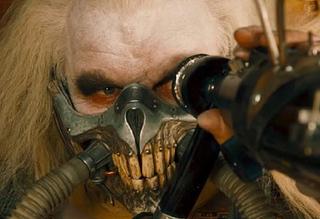
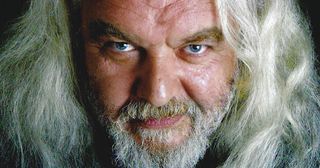
Mad Max
Starstruck
Those Who Love
Start your own collection
A free Your Stuff account allows you to save, organise and share your favourite videos, audio and stories.


