A Film for Discussion: Awakening
1973
A Film for Discussion: Awakening
1973
- NFSA IDEDAEP9WZ
- TypeFilm
- MediumMoving Image
- FormDocumentary
- Year1973
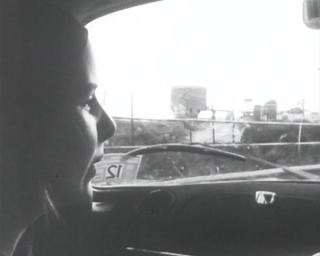
A man and a woman in a car are having a conversation. Jeni (Jeni Thornley), the young office worker, is troubled by what one of her co-workers has discussed with her that day. In the conversation with her boyfriend (John Brotherton) in the car, she exhibits an awakening to the dilemmas of being a woman in Australia in the early 1970s. Summary by Pat Fiske.
A man and a woman in a car are having a conversation. Jeni (Jeni Thornley), the young office worker, is troubled by what one of her co-workers has discussed with her that day. In the conversation with her boyfriend (John Brotherton) in the car, she exhibits an awakening to the dilemmas of being a woman in Australia in the early 1970s. Summary by Pat Fiske.
- NFSA IDEDAEP9WZ
- TypeFilm
- MediumMoving Image
- FormDocumentary
- Year1973
- Production companySydney Women's Film GroupAcknowledgementsProduced with assistance from the Film Radio and Television Board of the Australia Council
At that time most women assumed that they would get married and that home and family would be the centre of their lives, even if they did have a job. In 1970, in New South Wales, only about a third of girls completed Year 12 in high school. At work, women were largely limited to support jobs in a rather narrow range of industries. Professions such as nursing and teaching were open to women, and of course there were women who achieved success in other professions, but they were the exception rather than the norm.
By law, women did not receive equal pay with men and in some areas were still required to leave work if they got married so as not to take a job which would otherwise go to a man – the breadwinner. Women who did not have their own income were entirely dependent upon their husband, especially once they had children.
A film for Discussion synopsis
A Film for Discussion is a black-and-white experimental film made in 1970 using dramatised scenes, historical footage, stills, posters and ads to convey the situation of women, the emergence of the women’s movement in Australia and the awakening of one young woman to discrimination and the choices society offers her.
A Film for Discussion curator's notes
A Film for Discussion was made by the Sydney Women’s Film Group (SWFG), which was a loose collection of people including Martha Ansara, Jeni Thornley, Deirdre Ferguson and Julie Gibson, with assistance from John Brotherton and Chris Tillam. According to Ansara, the filmmaking operation was rather nebulous and anarchistic. The group supported a collective approach so there are no individual names and credits on the film, but rather a statement that it was made by the group.
The idea for a film that would bring to light the issues of the newly emerging women’s liberation movement started on a train trip to Melbourne in May 1970 when a group of women (who had recently founded a women’s group in Glebe) were on their way to the first Women’s Liberation Conference. This was at the time when the efforts by independent filmmakers to establish an Australian film industry, which went beyond government documentaries, TV and commercials, were beginning to show results.
In 1968, the federal government announced funding for an Experimental Film Fund. Ansara submitted an application for funding and went for an interview. She put on her make-up and leather mini-skirt, she reports, ‘because although we were for women’s liberation and being treated as equals on our own merits, I wasn’t that silly when it came to getting the money. And we got it.’ They received $1050 to make a short film. This sum would cover the lab costs; they had to find the rest of the money themselves.
Through their connections with the anti-Vietnam War street theatre group and the New Theatre, they found actors for the film. Chris Tillam, Martha’s partner at the time, had the most film experience in the group though Ansara, a keen filmgoer and film society member, had assisted Tillam on a cinéma vérité anti-war documentary in the US and had been involved with a political documentary group called Newsreel. At this time, women in Australia were generally not working as film directors nor operating cameras or recording sound.
The film’s visual style was developed in part by the limitations of heavy, cumbersome camera equipment but also because Ansara thought cinéma vérité was unsuitable for a film presenting the issues that women’s liberation were grappling with at the time. The group didn’t have the finances for many cans of 16mm film and didn’t have blimped portable cameras to make them quiet enough to record sound. A Film for Discussion was shot either mute or with a camera with an enormously heavy blimp.
The group held consciousness-raising and role-playing workshops with the participants, who also included Women’s Liberation activists. The slogan at the time was ‘the personal is the political’. By analysing their own lives and experience, the filmmakers could better understand the general position of women, the social expectations and the work issues. The dialogue for the film was all improvised and it had no written script.
The film was called A Film for Discussion to emphasise how they wanted the film deployed and distinguish it from films where the audience members were merely passive consumers of entertainment. The film took a long time to edit as the group’s political and personal lives got in the way but it was finally completed in 1973. They approached distribution in a grassroots way and took it to film societies, trade unions, schools, government departments, and anywhere that the issue of women’s liberation was being discussed. Through the Sydney Filmmakers’ Cooperative, many 16mm copies of the film were sold and rented.
A Film for Discussion was a finalist in the documentary section at the Greater Union Awards at the 1973 Sydney Film Festival. The SWFG used this as an opportunity to leaflet the Festival protesting against competitions, feeling it was absurd to compare films and choose one winner.
Notes by Pat Fiske
Need to license this item? A/V professionals and researchers can shortlist licensing enquiries via our NFSA Pro catalogue search and membership.
Collections to explore
Australian women


Romantic relationships
Cultural diversity
Start your own collection
A free Your Stuff account allows you to save, organise and share your favourite videos, audio and stories.


