The evolution of the skirt
1915
The evolution of the skirt
1915
- NFSA IDTZZSRR7Z
- TypeFilm
- MediumMoving Image
- FormNewsreel, Series
- Year1915
This animated clip begins with a white outline, gradually drawn in by the hand of the artist to show a woman dressed in 19th-century costume. A caption says ‘since the Colonial days, skirts have gradually shrunk’. The cartoon is then blackened to shorten the woman’s dress until it shows the then current 1915 hemline between the knee and ankle. It continues to shorten as the next caption reads: ‘what will next year bring forth?’.
Summary by Poppy de Souza
This animated clip begins with a white outline, gradually drawn in by the hand of the artist to show a woman dressed in 19th-century costume. A caption says ‘since the Colonial days, skirts have gradually shrunk’. The cartoon is then blackened to shorten the woman’s dress until it shows the then current 1915 hemline between the knee and ankle. It continues to shorten as the next caption reads: ‘what will next year bring forth?’.
Summary by Poppy de Souza
- NFSA IDTZZSRR7Z
- TypeFilm
- MediumMoving Image
- FormNewsreel, Series
- Year1915
- CompanyAustralasian Films
Unlike many of Harry Julius’s political sketches for Cartoons of the Moment, 'The evolution of the skirt’ comments on the changing lengths of women’s hemlines since the 19th century. It uses Julius’s recognisable style to make a discreetly dressed woman’s skirt rise above her knees to reveal her thighs. Commenting on social customs and fashions of the time was not the staple for Julius’s Australasian Gazette sketches, but it does show his ability to satirise social as well as political subject matter. This cartoon is also interesting to consider in the light of women’s fashion in the 21st century – where hemlines have risen above the heights predicated here.
The evolution of the skirt synopsis
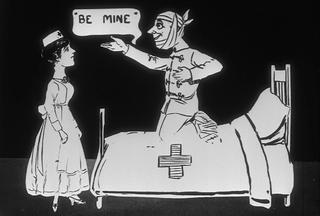
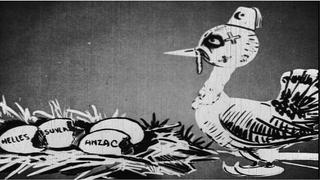
In this edition of Cartoons of the Moment from 1915, cartoonist Harry Julius uses cut-out and drawn animation to: comment on Germany’s offer of peace during the First World War; take a satirical look at the evolution of women’s fashions; and show Russia’s involvement in the war.
Curator's notes
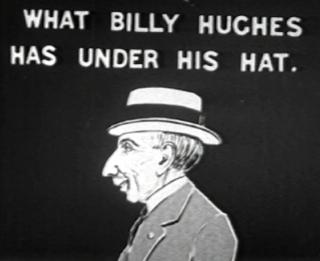
Cartoons have the power to distil many complex points in a single image, or series of images in the case of animation. Cartoons of the Moment succinctly draws together many strands of thought into a series of animated sketches that satirise the evolving political situation during the First World War. Harry Julius was employed by the Australasian Gazette to create Cartoons of the Moment, which ran at the end of wartime editions of the newsreel. The cartoons supported the Gazette’s recruitment drive for Australian troops, and in sketches from 1916 onwards, these became more and more persuasive by depicting the German forces as barbaric, murderous and a threat to the Australian way of life. Julius’s animated cartoons also occasionally provided social commentary on domestic issues that did not have to do specifically with the war.
Cartoons of the Moment employs paper cut-outs – white figures on a dark background. Cut-out animation uses two-dimensional character shapes, photographed with a stop-motion technique. Stop-motion, or frame-by-frame photography, involves photographing the action one frame at a time to create the effect of movement. Today, animation is more often achieved using computer technology.
This wartime series was probably the first example of locally-produced animated cartoons being screened on a weekly basis to Australian audiences. Political cartoons in print have a long tradition in Australia dating back to the mid-19th century. The first news magazine to feature political cartoons was The Bulletin, which began publication in 1880. Harry Julius drew for the magazine in the early decades of the 20th century.
Notes by Poppy de Souza
Need to license this item? A/V professionals and researchers can shortlist licensing enquiries via our NFSA Pro catalogue search and membership.
Collections to explore
Harry Julius
Animation


World War 1
Start your own collection
A free Your Stuff account allows you to save, organise and share your favourite videos, audio and stories.


