Edison Standard D model phonograph

Edison Standard D model phonograph
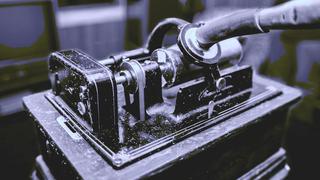
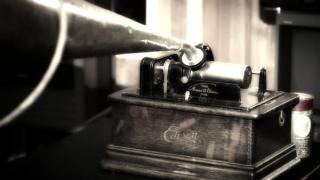
The Edison Standard D model phonograph dates from around 1908 and has a clockwork spring-powered motor. It has been fitted with a recorder head that can play back two-minute cylinders.
Recording on this equipment is a purely mechanical process, with no electricity involved. The performer sings down a metal horn and the energy of that sound is concentrated onto a thin circular mica disc in the recorder head. The vibrations of the disc move a thin glass rod which cuts the spiral groove in the cylinder.
The distance of the performer from the horn is critical; the performer has to be able to hear a reverberant echo coming back out of the horn for there to be enough mechanical energy to cut the groove.
The Edison Standard D model phonograph dates from around 1908 and has a clockwork spring-powered motor. It has been fitted with a recorder head that can play back two-minute cylinders.
Recording on this equipment is a purely mechanical process, with no electricity involved. The performer sings down a metal horn and the energy of that sound is concentrated onto a thin circular mica disc in the recorder head. The vibrations of the disc move a thin glass rod which cuts the spiral groove in the cylinder.
The distance of the performer from the horn is critical; the performer has to be able to hear a reverberant echo coming back out of the horn for there to be enough mechanical energy to cut the groove.
Need to license this item? A/V professionals and researchers can shortlist licensing enquiries via our NFSA Pro catalogue search and membership.
Collections to explore


Wax cylinder

Phonograph
Urthboy
Start your own collection
A free Your Stuff account allows you to save, organise and share your favourite videos, audio and stories.


