'Eddie Mabo' by Neil Murray
2000
'Eddie Mabo' by Neil Murray
2000
- NFSA ID57MJ5SW0
- TypeMusic and Sound Recordings
- MediumAudio
- FormMusic
- Duration3 mins, 34 secs
- GenresIndigenous themes or stories, Indigenous as subject, Popular music
- Year2000
- WARNING: Aboriginal and Torres Strait Islander viewers are advised that the following program may contain images and/or audio of deceased persons
Singer-songwriter Neil Murray was one of the founding members of the Warumpi Band and the writer of Christine Anu's iconic track 'My Island Home'.
A non-Indigenous artist, Murray told ABC radio in Ballarat that he works with Aboriginal artists because 'I like to hear truth and honesty. I like to hear real art.'
The lyrics of the song switch from first person to third person when talking about Eddie. In this excerpt we hear an imagining of what was going on in Eddie Mabo's head when he began his court case: 'When you see me in the morning going down, I'm gonna meet them. Ones with all the money and the power, I'm going to face them.' By speaking as Mabo, Murray shows Mabo's determination to get justice for his people. In the lyrics of the chorus the words 'Eddie Mabo, you're a hero' are repeated making evident Murray's esteem for Mabo and everything he achieved.
Most protest or social message songs tend to project their message assertively or aggressively to the listener so it's a surprise that 'Eddie Mabo' is actually very mellow. Its dance beat, laid-back keyboards and guitar parts and heavy use of reverb on Murray's vocals has a soothing and calming effect rather than being a call to action. This seems to echo the charm and calm certainty of Eddie Mabo himself who was able to bring about great change in Australia. The song is a highly polished studio recording.
Taken from the ABC Music title Eddie Mabo.
The cover image of this song is a promotional still from the film Mabo - Life of an Island Man, 1997 - Film Australia Collection © NFSA.
Notes by Beth Taylor
TRANSCRIPT
Eddie Mabo, you're a hero. Eddie Mabo, you're a hero.
When you see me in the morning going down. I'm gonna meet them.
Ones with all the money and the power, I'm going to face them.
- WARNING: Aboriginal and Torres Strait Islander viewers are advised that the following program may contain images and/or audio of deceased persons
Singer-songwriter Neil Murray was one of the founding members of the Warumpi Band and the writer of Christine Anu's iconic track 'My Island Home'.
A non-Indigenous artist, Murray told ABC radio in Ballarat that he works with Aboriginal artists because 'I like to hear truth and honesty. I like to hear real art.'
The lyrics of the song switch from first person to third person when talking about Eddie. In this excerpt we hear an imagining of what was going on in Eddie Mabo's head when he began his court case: 'When you see me in the morning going down, I'm gonna meet them. Ones with all the money and the power, I'm going to face them.' By speaking as Mabo, Murray shows Mabo's determination to get justice for his people. In the lyrics of the chorus the words 'Eddie Mabo, you're a hero' are repeated making evident Murray's esteem for Mabo and everything he achieved.
Most protest or social message songs tend to project their message assertively or aggressively to the listener so it's a surprise that 'Eddie Mabo' is actually very mellow. Its dance beat, laid-back keyboards and guitar parts and heavy use of reverb on Murray's vocals has a soothing and calming effect rather than being a call to action. This seems to echo the charm and calm certainty of Eddie Mabo himself who was able to bring about great change in Australia. The song is a highly polished studio recording.
Taken from the ABC Music title Eddie Mabo.
The cover image of this song is a promotional still from the film Mabo - Life of an Island Man, 1997 - Film Australia Collection © NFSA.
Notes by Beth Taylor
TRANSCRIPT
Eddie Mabo, you're a hero. Eddie Mabo, you're a hero.
When you see me in the morning going down. I'm gonna meet them.
Ones with all the money and the power, I'm going to face them.
- NFSA ID57MJ5SW0
- TypeMusic and Sound Recordings
- MediumAudio
- FormMusic
- Duration3 mins, 34 secs
- GenresIndigenous themes or stories, Indigenous as subject, Popular music
- Year2000
Eddie Mabo, you're a hero. Eddie Mabo, you're a hero.
When you see me in the morning going down. I’m gonna meet them.
Ones with all the money and the power, I'm going to face them.
Need to license this item? A/V professionals and researchers can shortlist licensing enquiries via our NFSA Pro catalogue search and membership.
Collections to explore

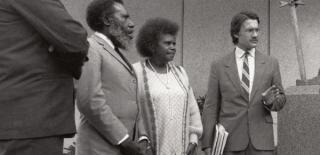

Eddie Mabo

Albert Namatjira

Lowitja O'Donoghue
Start your own collection
A free Your Stuff account allows you to save, organise and share your favourite videos, audio and stories.


