Dipping Sheep
1899
Dipping Sheep
1899
A farmer pushes sheep underwater with a plunger as they pass through an arsenic sheep dip.
Summary by Elizabeth Taggert - Speers
A farmer pushes sheep underwater with a plunger as they pass through an arsenic sheep dip.
Summary by Elizabeth Taggert - Speers
This actuality footage was taken by the official photographer of the Queensland Department of Agriculture on an unknown Queensland farm in 1899. Sheep dipping is a technique farmers have used since the 1850s to protect sheep against ticks, lice and fly-strike. The term 'sheep dip’ refers to both the solution and the trough from which the sheep is dipped, which you can see in this clip. The practice continues to this day.
Dipping Sheep synopsis
A farmer pushes sheep underwater with a plunger as they pass through an arsenic sheep dip.
Curator’s notes
The Queensland Department of Agriculture funded the world’s first government film production project in October 1898. The official photographer for the project was Frederick Charles Wills who was assisted by Henry William Mobsby. Together they produced over 30 short films using a hand-cranked Lumière Cinematographe camera (see Cinema Papers, 1993, No. 96, p 35).
Wills and Mobsby were appointed to film agricultural processes, national events and aspects of daily life, to attract British farmers to settle in Australia. Other films showing Queensland farm life and labouring include Wheat Harvesting with Reaper and Binder and South Sea Islanders Cutting Cane (both 1899).
Noyes by Elizabeth Taggert - Speers
Need to license this item? A/V professionals and researchers can shortlist licensing enquiries via our NFSA Pro catalogue search and membership.
Collections to explore
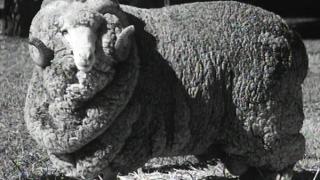

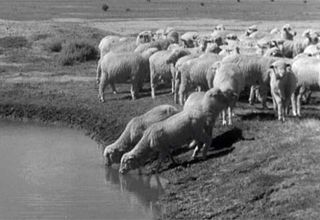
Farming and agriculture industry
Lumiere brothers

Manufacturing industry
Start your own collection
A free Your Stuff account allows you to save, organise and share your favourite videos, audio and stories.


