Blood Brothers – Freedom Ride
1993
Blood Brothers – Freedom Ride
1993
- NFSA IDABGRNVM2
- TypeFilm
- MediumMoving Image
- FormSeries
- Duration55 mins
- GenresIndigenous themes or stories, Indigenous as subject
- Year1993
Young children in Moree are given permission to go to the swimming pool with the university students led by Charles Perkins. The children scramble onto the bus, and begin to sing a contemporary popular song. On the bus, they are headed to the baths.
CURATOR'S NOTES
This moment is described by Lyle Munro as one of the most important moments of his life, and the joy of the children in being part of a wave of change erupts in song. The joy and enthusiasm of the children capture the mood of this film, as the disruption of the old social order and the promise of a new one is expressed in the energy of the children.
Blood Brothers – Freedom Ride Synopsis
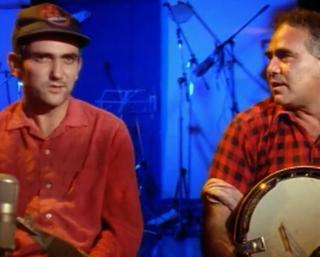
A documentary that intercuts interview material with historical footage, Freedom Ride, written and directed by Rachel Perkins, delves into the political motivations of her father, Dr 'Kumantjayi' (Charlie) Perkins. Perkins was a university student in the 60s and led other students on a 'freedom ride' through rural communities where the segregation between whites and Aboriginal people were still in place.
Curator's Notes
The second episode of the Blood Brothers series written and directed by Rachel Perkins, gives a good account of the political motivations and emergent voice of Dr 'Kumantjayi' (Charlie) Perkins. Dr 'Kumantjayi' Perkins as a young university student organised a 'freedom ride', modelled on the freedom rides organised in the USA by African Americans to fight racial segregation and discrimination. The close relationship between father as subject and daughter as interviewer gives this film an intimate feel, and the importance of the work of political activist Dr Perkins is documented in the work of his daughter Rachel. The first Aboriginal person to graduate from a university, Dr Perkins became one of the most important First Nations leaders of the modern era. See also:
Rachel Perkins is one of the most influential First Nations filmmakers in the present time. The content of Rachel Perkins' films is very much about First Nations cultural preservation, and communicates the significance of First Nations cultural practice and tradition to both First Nations and non-First Nations peoples. Other films by Rachel Perkins include Radiance (1998), One Night The Moon (2001), Yeperenye Federation Festival: The Road Ahead Concert (2003).
'Kumantjayi' is the name used in Arrernte culture when a person is deceased. Dr Perkins passed away in 2000, and in the culture of the Arrernte people, the person's first name is replaced with the word 'Kumantjayi' out of respect.
Young children in Moree are given permission to go to the swimming pool with the university students led by Charles Perkins. The children scramble onto the bus, and begin to sing a contemporary popular song. On the bus, they are headed to the baths.
CURATOR'S NOTES
This moment is described by Lyle Munro as one of the most important moments of his life, and the joy of the children in being part of a wave of change erupts in song. The joy and enthusiasm of the children capture the mood of this film, as the disruption of the old social order and the promise of a new one is expressed in the energy of the children.
Blood Brothers – Freedom Ride Synopsis
A documentary that intercuts interview material with historical footage, Freedom Ride, written and directed by Rachel Perkins, delves into the political motivations of her father, Dr 'Kumantjayi' (Charlie) Perkins. Perkins was a university student in the 60s and led other students on a 'freedom ride' through rural communities where the segregation between whites and Aboriginal people were still in place.
Curator's Notes
The second episode of the Blood Brothers series written and directed by Rachel Perkins, gives a good account of the political motivations and emergent voice of Dr 'Kumantjayi' (Charlie) Perkins. Dr 'Kumantjayi' Perkins as a young university student organised a 'freedom ride', modelled on the freedom rides organised in the USA by African Americans to fight racial segregation and discrimination. The close relationship between father as subject and daughter as interviewer gives this film an intimate feel, and the importance of the work of political activist Dr Perkins is documented in the work of his daughter Rachel. The first Aboriginal person to graduate from a university, Dr Perkins became one of the most important First Nations leaders of the modern era. See also:
Rachel Perkins is one of the most influential First Nations filmmakers in the present time. The content of Rachel Perkins' films is very much about First Nations cultural preservation, and communicates the significance of First Nations cultural practice and tradition to both First Nations and non-First Nations peoples. Other films by Rachel Perkins include Radiance (1998), One Night The Moon (2001), Yeperenye Federation Festival: The Road Ahead Concert (2003).
'Kumantjayi' is the name used in Arrernte culture when a person is deceased. Dr Perkins passed away in 2000, and in the culture of the Arrernte people, the person's first name is replaced with the word 'Kumantjayi' out of respect.
- NFSA IDABGRNVM2
- TypeFilm
- MediumMoving Image
- FormSeries
- Duration55 mins
- GenresIndigenous themes or stories, Indigenous as subject
- Year1993
- ProducersRachel Perkins and Ned LanderDirector and WriterRachel Perkins
Education Notes
This clip shows interviews conducted in 1965 with non-Indigenous Australians on the subject of their views on Indigenous Australians. The interviews are filmed in people’s homes, in the street and at a social function. Footage of Dr Kumantjayi (Charles) Perkins speaking publicly on the issue of Anglo-Australians’ responsibility to Indigenous Australians follows. Finally there is newsreel footage of the protests that took place on the Freedom Ride of 1965. Two intertitles are used to provide information and context. The clip is mostly black-and-white footage.
Educational value points
- The clip features Dr Charles Perkins, a pioneer in Indigenous political leadership and activism. Perkins (1936–2000) moved to Sydney in 1963 to study at the University of Sydney. As the leader of Student Action for Aborigines he was an articulate spokesman for and played an integral role in the Freedom Ride of 1965. He went on to provide inspiration and leadership in key roles as a national Aboriginal leader and spokesperson until his death in 2000.
- The non-Indigenous Australians interviewed in this clip reveal in their comments their separation from and ignorance about Indigenous people and cultures, exposing the political and racial context of Australia in the 1960s. At the time Australia was regarded as a homogeneous society, with policies of immigration and assimilation largely designed to maintain this status quo. Indigenous Australians were not included on a national census, nor were they guaranteed the right to vote until 1967.
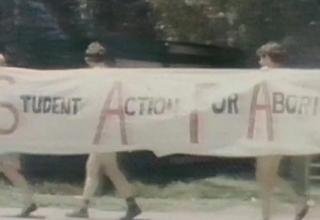
- The clip clearly contrasts the non-Indigenous Australians who, Perkins says, talk about providing opportunities for Aboriginal people ‘but don’t do it’ and the University of Sydney students who in 1964 decided it was time to act. From a young Charles Perkins stating that while most Anglo-Australians claim to ‘want to give the Aborigine a fair go’ they do nothing to ensure it, the clip cuts to footage of students carrying a banner that reads ‘Student Action For Aborigines’. The Freedom Ride of 1965, in which Perkins played a major role, was designed to confront non-Indigenous Australian society with the racial injustice that it was ignoring not just in rural New South Wales but throughout Australia.
- The Student Action for Aborigines movement had its inception at the University of Sydney as a result of criticism of Australian students by the US press in 1964 for attending a rally in support of the newly enacted US Civil Rights Bill while apparently ignoring racism at home. The student association organised a concert and rally in July 1964 in support of Indigenous Australian rights, addressed by the only two Indigenous students at Sydney University at the time, Perkins and Gary Williams.
- Indigenous Australian filmmaker Rachel Perkins (1970–) portrays her father’s story in Freedom Ride, the first episode in the SBS series Blood Brothers (1993). Her later works explore and communicate a range of experiences of Indigenous Australian people. She has directed the feature films Radiance (1998) and One Night the Moon (2001). She was a key creator on the SBS series First Australians (2008) and edited the accompanying book First Australians: an illustrated history (2008).
Need to license this item? A/V professionals and researchers can shortlist licensing enquiries via our NFSA Pro catalogue search and membership.
Collections to explore
Blood Brothers
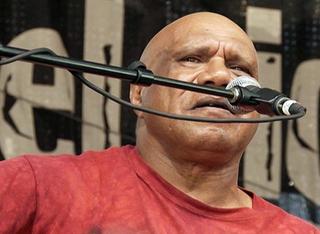
SBS Television

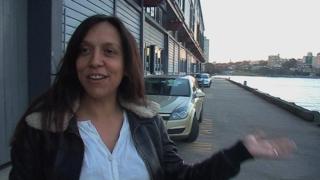
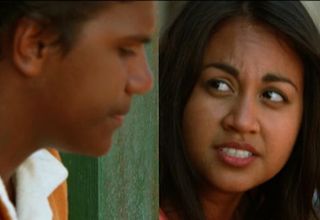
Rachel Perkins
Start your own collection
A free Your Stuff account allows you to save, organise and share your favourite videos, audio and stories.


