Beyond Sorry: This child, Zita
2003
Beyond Sorry: This child, Zita
2003
- WARNING: Aboriginal and Torres Strait Islander viewers are advised that the following program may contain images and/or audio of deceased persons
Aggie Abbott tells of how, when Zita returned to her mother after years of being absent, her mother said that her daughter was dead. Ron Wallace, Zita’s husband, talks about Zita’s experience of being immersed within Western society and alienated from Indigenous culture. At home, Zita packs away her belongings, making ready to move out to her grandfather’s land. Summary by Romaine Moreton.
- WARNING: Aboriginal and Torres Strait Islander viewers are advised that the following program may contain images and/or audio of deceased persons
Aggie Abbott tells of how, when Zita returned to her mother after years of being absent, her mother said that her daughter was dead. Ron Wallace, Zita’s husband, talks about Zita’s experience of being immersed within Western society and alienated from Indigenous culture. At home, Zita packs away her belongings, making ready to move out to her grandfather’s land. Summary by Romaine Moreton.
- Production companyCAAMA ProductionsProducerDavid VadivelooExecutive ProducersBeck Cole, Citt WilliamsDirectorDavid VadivelooWriterDavid VadivelooOriginal musicMichael Den ElzenCastAunty Aggie Abbott, Zita Wallace
The compelling and emotional story is evocatively told through the voice of Zita Wallace and that of her Aunty Aggie Abbott. Zita represents an Indigenous person removed from cultural and philosophical context, and indoctrinated by Western cultural thought. Aggie is an Indigenous woman who, through circumstance, stayed with her family and was raised within her ancient culture with its specific relation to land and place. The essence of both women, soft, gentle, and invested in preserving tradition, fulfils a dramatic contrast while at the same time, a unified sense of being. The filmic complexity of this clip is that it essentially reaches the heart of these two women, and all that they represent. While Aggie avoided being taken, Zita while physically taken, was never really removed from this place.
Beyond Sorry synopsis
When she was eight years old, Zita Wallace was removed from her families by the authorities. This is a documentary about the Stolen Generations, and the journey of one woman to reconnect with the Eastern Arrernte family from whom she was denied for most of her life.
Beyond Sorry is part of the Nganampa Anwernekenhe series produced by Central Australian Aboriginal Media Association (CAAMA) Productions. Nganampa Anwernekenhe means 'ours’ in the Pitjantjatjara and Arrernte lanuages, and the series aims to contribute to the preservation of Indigenous languages and cultures.
Beyond Sorry curator's notes
This is a haunting documentary about the beauty and pain of a child, now an elderly woman, who was removed from her family by the authorities. The filmmakers tell the parallel stories of Zita Wallace and her Aunty Aggie Abbott to represent two positions; two half-caste children, one child removed, one not. Zita grew up within white culture and, through her own testimony, is again like an 8 year old, picking up her education in Indigenous culture from the moment in her life when she was taken from her family. Seeking the connection with family and place that was denied her, Zita Wallace is fully committed to overcoming broken ties.
There is a complex range of issues covered here, conveyed with filmic fluidity. One of them being that the removal of Aboriginal children from their families left great holes in those communities, and that the children, without a self-knowledge within Indigenous cultural context, became vulnerable to discrimination within white society. Another is the broken spirit of the parents from whom the children were taken. Zita’s mother, having been told her daughter was dead, believed her daughter to be a spirit child when she finally returned. The greatest disruption is to the social fabric of Indigenous societies, where each child would have served a specific role in the continuation of Indigenous cultural practice and religion, being entitled to different parts of the country. The filmmakers get to the heart of the consequence of child removal, yet tell a story that is painfully humane, and never compromising the humanity and beauty of its subjects.
Notes by Romaine Moreton
Need to license this item? A/V professionals and researchers can shortlist licensing enquiries via our NFSA Pro catalogue search and membership.
Collections to explore
Family tradition

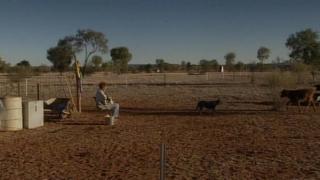
Arrernte language

First Nations
Start your own collection
A free Your Stuff account allows you to save, organise and share your favourite videos, audio and stories.


