Anzac Day March, 1946: Home Movie
1946
Anzac Day March, 1946: Home Movie
1946
- NFSA IDVA22SKT6
- TypeFilm
- MediumMoving Image
- FormHome movie
- Year1946
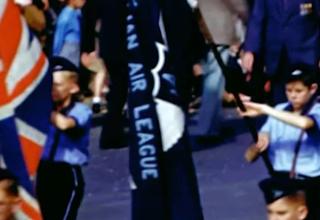
This is a clip from a 1940s home movie with footage of a street parade through Sydney for Anzac Day in 1946.
This footage was identified as being filmed in 1946 for several reasons. The vehicle number plates align with those issued around 1945–6.
Also, according to the Sydney Morning Herald, the route of the march in 1946 included an incline – seen here at the St James end of Hyde Park – which caused some older ex-service personnel to collapse.
From 1947, a longer route provided more vantage points for spectators. Ex-service personnel took to marching 16 abreast so that the duration of the march didn't increase greatly with the longer route. Here, you can see them marching in formations of 12 or fewer abreast.
Approximately 30,000 people attended the dawn service at the Cenotaph at Martin Place in Sydney, with some securing their viewing positions the previous afternoon. Newspaper reports suggest that numbers could have been greater but public transport did not adequately meet the demand.
The Barrier Miner newspaper reported that the procession through Sydney in 1946 lasted more than two-and-a-half hours with 50,000 ex-servicemen and women marching.
In the clip we see women marching with men, which was unusual. A small contingent of women are marching together who may have been nurses, as they are not wearing uniforms. These marching women have medals pinned to the left-hand side, indicating that they served. Also visible are women in uniform, as they could serve in the Australian military from 1941. Servicewomen were banned from marching in Brisbane that year, essentially because their presence had not been planned for by march organisers.
The Red Ensign features prominently in this clip, as was common up until the passing of the Commonwealth Flag Act in 1953.
This is a clip from a 1940s home movie with footage of a street parade through Sydney for Anzac Day in 1946.
This footage was identified as being filmed in 1946 for several reasons. The vehicle number plates align with those issued around 1945–6.
Also, according to the Sydney Morning Herald, the route of the march in 1946 included an incline – seen here at the St James end of Hyde Park – which caused some older ex-service personnel to collapse.
From 1947, a longer route provided more vantage points for spectators. Ex-service personnel took to marching 16 abreast so that the duration of the march didn't increase greatly with the longer route. Here, you can see them marching in formations of 12 or fewer abreast.
Approximately 30,000 people attended the dawn service at the Cenotaph at Martin Place in Sydney, with some securing their viewing positions the previous afternoon. Newspaper reports suggest that numbers could have been greater but public transport did not adequately meet the demand.
The Barrier Miner newspaper reported that the procession through Sydney in 1946 lasted more than two-and-a-half hours with 50,000 ex-servicemen and women marching.
In the clip we see women marching with men, which was unusual. A small contingent of women are marching together who may have been nurses, as they are not wearing uniforms. These marching women have medals pinned to the left-hand side, indicating that they served. Also visible are women in uniform, as they could serve in the Australian military from 1941. Servicewomen were banned from marching in Brisbane that year, essentially because their presence had not been planned for by march organisers.
The Red Ensign features prominently in this clip, as was common up until the passing of the Commonwealth Flag Act in 1953.
- NFSA IDVA22SKT6
- TypeFilm
- MediumMoving Image
- FormHome movie
- Year1946
Need to license this item? A/V professionals and researchers can shortlist licensing enquiries via our NFSA Pro catalogue search and membership.
Collections to explore


Demonstrations, rallies and marches



1940s
Sydney
Start your own collection
A free Your Stuff account allows you to save, organise and share your favourite videos, audio and stories.


